
As global aquaculture continues to industrialize, investors and manufacturers are increasingly focused on building efficient, scalable, and profitable fish feed production plants. However, success in this industry depends not only on market demand but also on intelligent factory design and equipment selection.
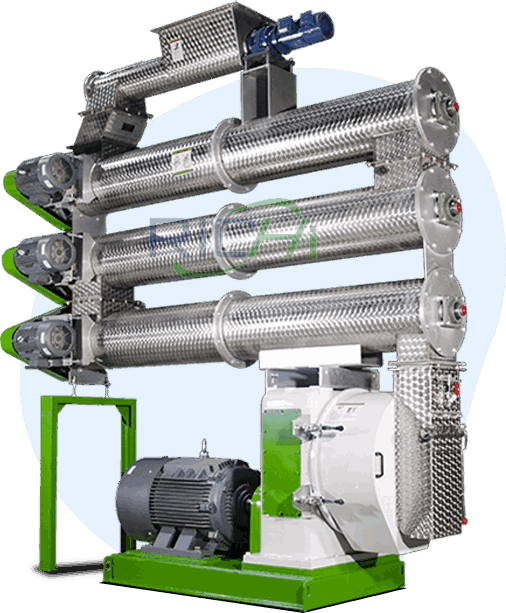
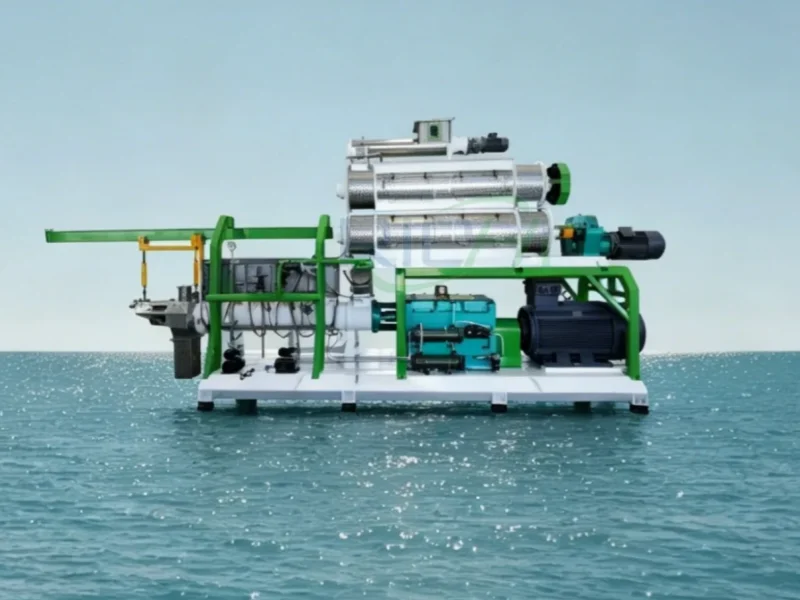
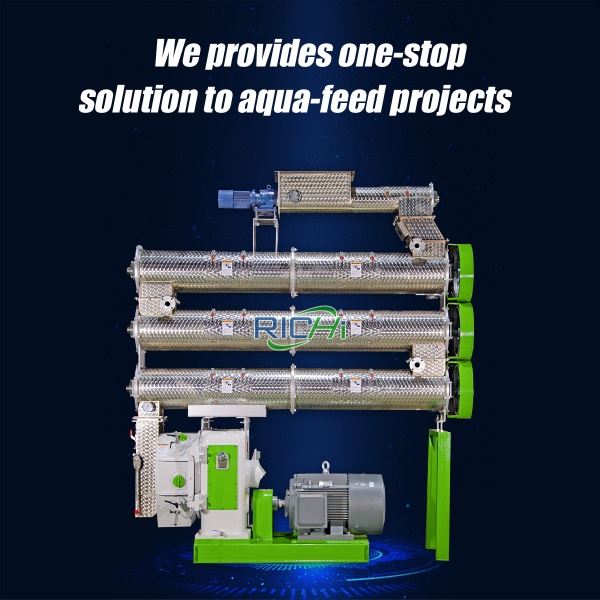
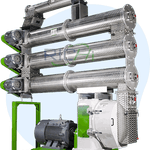
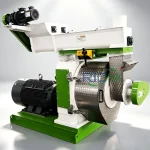
At the core of every efficient aquafeed plant is the sinking fish feed extrusion machine, which determines pellet density control, production stability, and overall system flexibility.
This article explains how modern fish feed factories are designed, how capacity is selected, and how extrusion technology directly influences profitability.
1. The Industrial Shift Toward Integrated Feed Production Plants
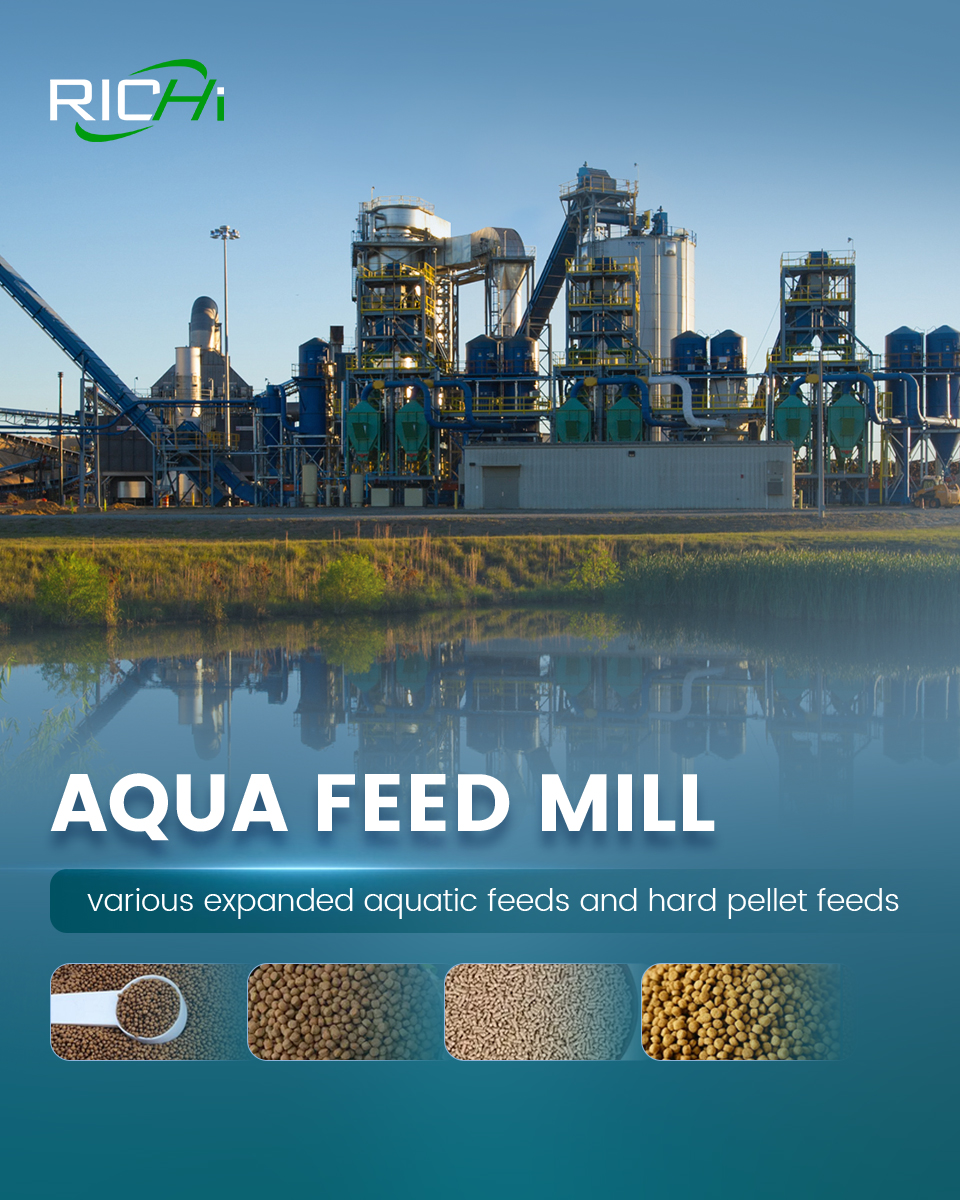
Modern aquafeed production is no longer a simple pelletizing process. Instead, it has evolved into fully integrated industrial systems combining multiple processing stages.
A standard plant includes:
- Raw material receiving and storage
- Grinding and milling systems
- Mixing and batching units
- Conditioning and extrusion systems
- Drying and cooling sections
- Packaging and storage systems
The sinking fish feed extrusion machine is one of the most critical components because it directly determines feed density and sinking performance.
(Related Post: https://www.richipelletmill.com/floating-fish-feed-extruder-machine/ )
2. Why Plant Layout Design Directly Impacts Profitability
A poorly designed factory layout can lead to:
- Material flow inefficiency
- Higher labor cost
- Energy waste
- Production bottlenecks
In contrast, a well-optimized layout improves:
- Continuous production flow
- Reduced transportation distance between machines
- Lower maintenance downtime
- Higher output per unit energy
Modern design principles focus on linear or U-shaped production flow to ensure maximum efficiency.
3. Capacity Selection Strategy for Feed Production Plants
Choosing the correct production capacity is one of the most important investment decisions.
Small-to-medium investors often start with systems such as the high efficient floating fish feed extruder machine for sale, which provides flexible production capability for multiple aquaculture markets.
Typical capacity ranges include:
- 0.2–1 T/H: Small farms and startups
- 2–3 T/H: Medium commercial operations
- 5 T/H and above: Industrial-scale production plants
Proper capacity planning ensures:
- Stable production output
- Balanced raw material consumption
- Faster return on investment
4. Role of Extrusion Technology in Plant Efficiency
Extrusion technology is the heart of modern fish feed manufacturing. Unlike traditional pellet mills, extrusion systems provide:
- Precise density control
- Better nutrient gelatinization
- Adjustable pellet size and hardness
- Higher production consistency
The sinking fish feed extrusion machine ensures that bottom-feeding species receive feed with proper sinking behavior and minimal nutrient loss.
This improves feed conversion ratio and reduces operational waste.
5. Importance of Equipment Manufacturer Selection
Choosing the right manufacturer is essential for long-term production success.
Companies such as Richi Machinery provide complete engineering solutions, including factory layout design, installation guidance, and production optimization.
Similarly, Richi Pellet Mill is widely recognized for delivering reliable extrusion systems that meet international aquafeed standards.
Working with experienced manufacturers provides:
- Higher system stability
- Lower maintenance costs
- Better automation integration
- Longer equipment lifespan
6. Floating and Sinking Feed Production Synergy
Modern aquafeed plants are increasingly designed to produce both floating and sinking feed.
For example:
- Floating feed systems handle surface-feeding fish such as tilapia
- Sinking feed systems support shrimp and bottom-feeding species
This dual capability significantly increases market coverage and profitability.
The sinking fish feed system ensures dense pellet formation, while floating systems ensure buoyant feed for surface feeders.
7. Production Optimization Techniques
To maximize factory efficiency, manufacturers should focus on:
Raw Material Preparation
Proper grinding ensures uniform particle size for consistent extrusion.
Moisture Control
Balanced moisture improves pellet density and stability.
Screw Configuration Adjustment
Different screw designs affect compression and output quality.
Energy Optimization
Modern systems reduce power consumption per ton of feed produced.
8. Global Market Demand for Aquafeed Production Plants
Aquaculture demand is increasing in regions such as:
- Southeast Asia
- South America
- Africa
- Middle East
These markets are driving strong demand for scalable fish feed production plants with flexible extrusion systems.
9. Industry Trends in Feed Plant Engineering
The aquafeed industry is shifting toward:
- Fully automated production lines
- Smart monitoring systems
- Energy-efficient extrusion equipment
- Modular plant design
- Sustainable production models
These trends are reshaping how factories are designed and operated globally.
10. Technical Learning and Industry Insights
For deeper engineering and production insights, manufacturers often refer to like it resources that provide practical guidance on extrusion system design and optimization strategies.
Conclusion
A profitable fish feed production plant depends on smart layout design, correct capacity planning, and advanced extrusion technology.
The sinking fish feed extrusion machine plays a central role in ensuring stable production, high pellet quality, and long-term operational efficiency.
By combining intelligent design with reliable equipment suppliers, manufacturers can build highly competitive aquafeed production systems in the global market.