

Why Are Biomass Residues Becoming an Important Resource?
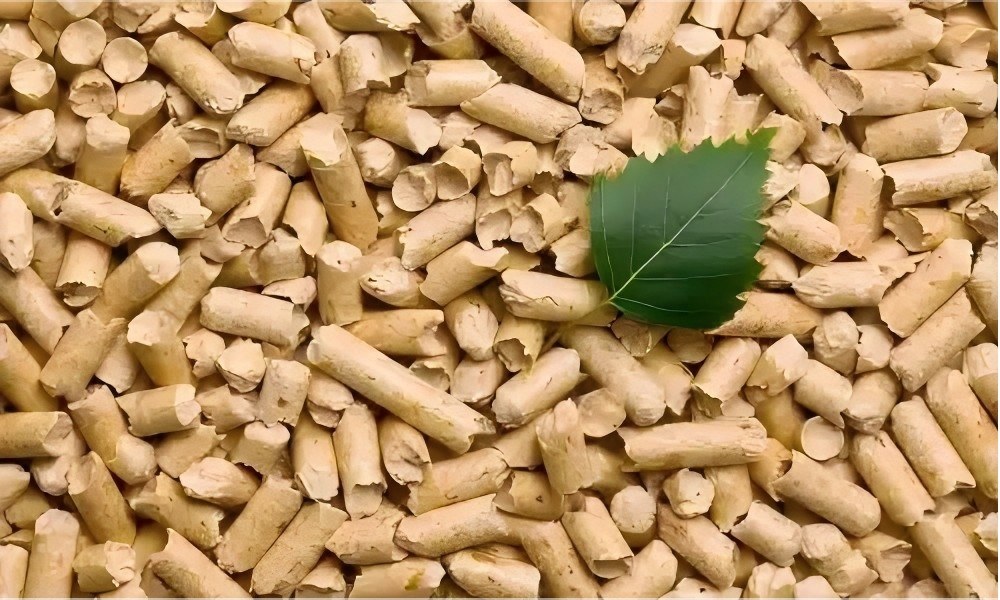
The biomass industry is changing the way businesses think about agricultural and forestry residues. Materials that were once considered low-value waste can increasingly be processed into useful fuels and other commercial products.
Wood chips are particularly interesting because they are generated by many different industries. Sawmills, forestry companies, furniture manufacturers, woodworking factories, and tree-processing businesses can all produce substantial quantities of wood residues.
The challenge is that loose biomass is often difficult to store and transport efficiently. It can have a low bulk density, inconsistent moisture, and irregular particle size.
Pelletizing provides a way to transform these materials into a denser and more standardized product.
However, successful biomass pellet production does not begin with buying equipment. It begins with understanding the material, the market, and the economics of the project.
What Types of Biomass Can Be Processed Into Pellets?
Biomass pellet production can involve a wide range of feedstocks.
Common examples include:
- Wood chips
- Sawdust
- Wood shavings
- Forestry residues
- Rice husk
- Sunflower husk
- Wheat straw
- Corn stalks
- Cotton stalks
- Other agricultural residues
Each material has different physical and chemical characteristics.
Wood-based materials often contain natural lignin that contributes to pellet binding. Agricultural residues may have higher ash content or different fiber structures and may require different preparation and operating conditions.
Therefore, a pellet production line should not be designed simply according to the general category “biomass.”
The specific feedstock needs to be considered.
Why Is Raw Material the Starting Point?
Imagine two factories both want to produce five tons of pellets per hour.
The first factory has dry sawdust from a furniture plant.
The second factory has freshly collected wood chips from forestry operations.
Although the target production capacity is identical, their processing requirements could be very different.
The first factory may need only material handling and pelletizing.
The second could require chipping, crushing, grinding, drying, and additional storage.
This is why raw material information should be collected before equipment selection.
A good initial assessment should include:
Moisture content
How much water is present in the biomass?
Particle size
Are the particles already small enough for pelletizing?
Daily availability
How many tons can be supplied consistently?
Seasonal variation
Will the supply change during different seasons?
Contamination
Does the material contain stones, soil, metal, plastic, or treated wood?
Bulk density
How much storage and transportation capacity will be required?
These factors influence both technical design and project economics.
What Role Does a Wood Pelletizer Play?
Once the biomass has been appropriately prepared, it can enter the pelletizing stage.
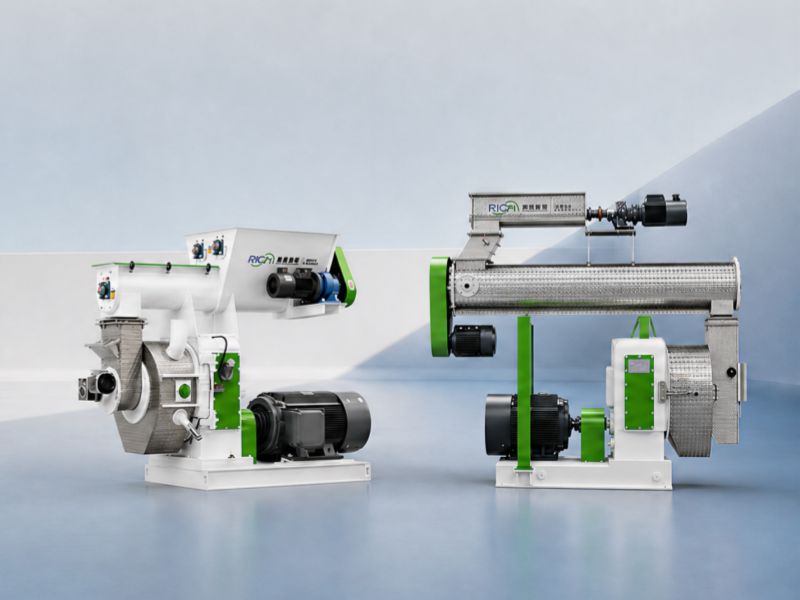
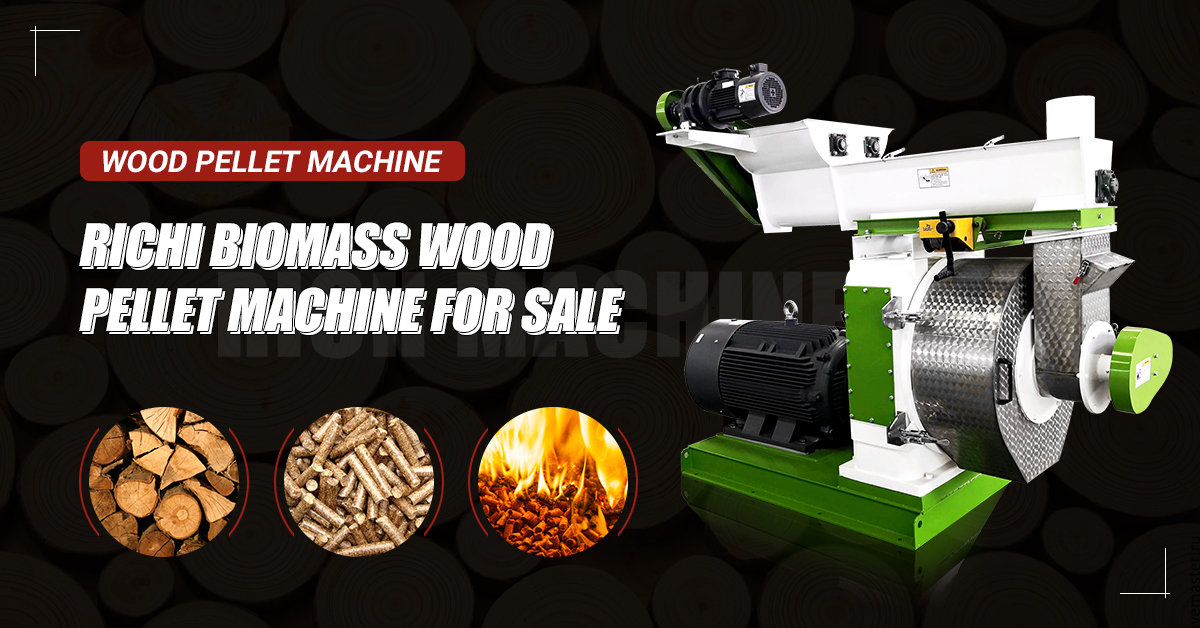
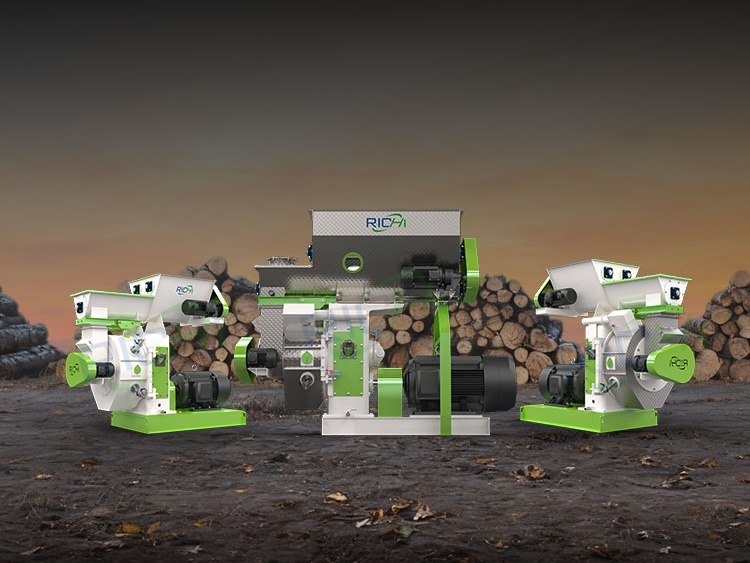
A wood chip pelletizer machine compresses prepared biomass through a die to form cylindrical pellets.
The process relies on pressure and heat.
For wood materials, natural lignin can soften under suitable conditions and help particles bond together.
However, the pelletizer cannot compensate for poorly prepared raw material.
If the material contains excessive moisture or oversized particles, the pelletizing process may become unstable.
This is why the equipment should always be considered as part of a complete processing system.
How Does Moisture Affect Pellet Production?
Moisture is one of the most important factors in biomass processing.
If the material is too wet, it may not form stable pellets.
Excess moisture can also increase energy consumption because the water must be removed before or during processing.
On the other hand, excessively dry biomass is not necessarily ideal either.
The producer should aim for a moisture condition appropriate for the specific material and pelletizing process.
This requires actual testing rather than relying on assumptions.
Moisture can also vary throughout the year.
Outdoor-stored wood chips may absorb rain, while freshly harvested biomass can have substantially different moisture from material that has been stored indoors for several weeks.
When Should a Dryer Be Added?
A dryer is normally considered when the incoming biomass contains too much moisture for efficient pelletizing.
However, installing a dryer simply because “biomass pellet plants need dryers” can lead to unnecessary investment.
A factory producing relatively dry sawdust may not need substantial drying.
A forestry project using freshly harvested chips could have completely different requirements.
The correct decision should be based on:
- Initial moisture
- Required final moisture
- Production capacity
- Available heat source
- Local energy costs
- Operating hours
The dryer should also be sized according to the actual amount of water that needs to be removed.
Why Is Particle Size Important?
The physical size of biomass particles influences feeding, grinding, compression, and pellet quality.
Large wood chips may need to be reduced before pelletizing.
A crusher can handle larger pieces, while a hammer mill can further reduce material into smaller particles.
But smaller does not always mean better.
Grinding consumes electricity, and unnecessary grinding increases operating costs.
The goal is to create a particle size that works effectively with the pellet mill while keeping energy consumption reasonable.
This is especially important for large commercial projects where electricity represents a significant operating expense.
What Happens Before Biomass Enters the Pellet Mill?
A typical process may include several preparation stages.
Raw Material Receiving
Biomass is delivered to the factory and transferred into a storage or feeding system.
Cleaning
Foreign materials may need to be removed before further processing.
Crushing or Chipping
Oversized material is reduced into manageable pieces.
Grinding
The biomass is processed into particles suitable for pelletizing.
Drying
Excess moisture is removed when necessary.
Conditioning and Feeding
Prepared material is delivered to the pellet mill at a stable rate.
The exact sequence depends on the feedstock.
For example, a sawmill producing fine, dry sawdust may require a much simpler process than a forestry operation handling fresh branches.
How Should Production Capacity Be Calculated?
Production capacity should never be selected independently from raw material supply.
A useful starting point is:
Available biomass × operating hours × realistic utilization rate = potential production
Suppose a factory can consistently collect 30 tons of suitable dry biomass per day.
If the equipment operates for ten hours per day, the theoretical material availability is approximately three tons per hour.
However, this does not mean a three-ton-per-hour pellet mill will automatically be the perfect choice.
Material losses, downtime, maintenance, moisture reduction, and future expansion also need to be considered.
The final capacity should therefore be based on a realistic production model rather than a simple calculation.
Why Should Market Demand Be Considered?
A pellet plant needs a market.
It is possible to have abundant biomass and still struggle to make a project profitable if the finished pellets cannot be sold at an appropriate price.
Potential customers can include:
- Industrial boiler operators
- Commercial heating companies
- Biomass fuel distributors
- Manufacturing facilities
- Agricultural businesses
- Renewable energy companies
Before investment, producers should determine what type of pellet customers actually want.
Important questions include:
- What pellet diameter is required?
- What moisture level is acceptable?
- What ash content is allowed?
- Are customers buying bags or bulk material?
- How far will the pellets need to be transported?
- What competing fuels are available?
These questions can influence the entire project design.
How Important Is Pellet Diameter?
Pellet diameter should be selected according to the target application.
Residential heating customers may have different requirements from industrial boilers.
Some automated fuel systems are designed for particular pellet dimensions.
Therefore, choosing the die should be one part of a broader product strategy.
A producer should identify the intended customers before finalizing pellet specifications.
This can prevent the situation where a factory produces technically acceptable pellets that do not match the preferred fuel specifications of its target market.
What Is the Difference Between Wood and Husk Pellet Production?
Wood and agricultural husks are both biomass materials, but their processing characteristics can differ significantly.
Wood usually has a relatively fibrous structure and can benefit from the binding characteristics of lignin.
Husk materials such as rice husk may contain higher ash levels and have a different particle structure and bulk density.
This means equipment capacity cannot be compared simply by looking at the number of tons per hour.
For example, businesses researching 0.5-10 T/H husk pellet press machine cost should consider the type and condition of the husk, required pellet size, moisture content, and complete equipment configuration rather than evaluating the quoted price alone.
The same principle applies when selecting equipment for wood chips.
Why Should Buyers Compare Complete Equipment Configurations?
Two suppliers can offer machines with apparently identical capacities but very different equipment scopes.
One quotation may include only the main pellet mill.
Another may include:
- Raw material feeding
- Crusher
- Hammer mill
- Dryer
- Pellet mill
- Cooler
- Screener
- Conveyors
- Electrical control system
- Packing equipment
The second quotation will naturally have a higher purchase price.
Therefore, comparing only the final number can be misleading.
A better method is to create a standardized equipment checklist and ask each supplier to quote against the same requirements.
What Is Included in a Complete Pellet Plant?
A commercial pellet plant may contain multiple processing stages depending on the feedstock.
The front end focuses on raw material preparation.
The central stage focuses on pelletizing.
The back end focuses on cooling, screening, storage, and packaging.
A typical flow could look like:
Raw Material → Crushing → Grinding → Drying → Pelletizing → Cooling → Screening → Packing
But this is not a universal formula.
A project using dry and fine sawdust may remove several stages.
A project using wet forestry residues may need more extensive preparation.
The best design is the one that matches the material rather than simply including every available machine.
Why Is Cooling Necessary?
Fresh pellets leave the pellet mill hot.
They need to be cooled before packaging and storage.
Cooling helps stabilize the pellets and improves handling.
It also allows the production process to continue at a consistent rate.
The capacity of the cooler should be matched to the pellet mill.
If the pellet mill can produce six tons per hour but the cooler can process only four tons per hour, the cooler becomes a production bottleneck.
This is why auxiliary equipment deserves as much attention as the main pelletizing machine.
What Does Screening Accomplish?
Screening removes fines and broken pellets from the finished product.
This creates a more uniform final product and can improve its appearance and handling characteristics.
Depending on the system, fines may be recycled into production.
This allows producers to recover material that would otherwise become waste.
For commercial producers, screening can be particularly useful when customers have strict requirements regarding fines content.
How Should Finished Pellets Be Stored?
Finished pellets need protection from moisture.
Although pellets are dense and convenient to transport, they can absorb moisture under unsuitable storage conditions.
A good warehouse should provide:
- A dry environment
- Protection from rain
- Suitable ventilation
- Adequate floor space
- Safe loading areas
- Sufficient storage capacity
Storage should be planned together with production.
If the factory produces continuously but customers purchase seasonally, more finished-product storage may be required.
What Are the Main Operating Costs?
Equipment investment is only one part of the economics.
A biomass pellet project may also involve significant ongoing costs.
Electricity
Grinding, pelletizing, conveying, cooling, screening, and packing require electrical power.
Thermal Energy
Drying can be a major energy expense when wet biomass is processed.
Labor
Operators are needed for production, maintenance, quality control, and material handling.
Maintenance
Dies, rollers, hammers, screens, bearings, and other wear components require regular attention.
Transportation
Both incoming biomass and finished pellets may need to be transported.
Packaging
Bagged products require packaging materials and additional handling.
Calculating these costs per ton provides a more useful picture of project profitability.
Can Existing Wood Waste Reduce Raw Material Costs?
Businesses that already generate wood residues may have an important advantage.
A sawmill, furniture factory, or woodworking company may already have access to large quantities of biomass without purchasing it from outside suppliers.
This can potentially reduce raw material costs.
However, businesses should also consider whether their existing residues already have another valuable use.
For example, sawdust may currently be sold to another company or used internally as boiler fuel.
The economic value of these existing uses should be compared with the potential value of pellet production.
How Can Equipment Selection Reduce Long-Term Costs?
The cheapest machine is not always the most economical choice.
A machine with a low purchase price but high electricity consumption can become expensive over several years.
Similarly, equipment that requires frequent maintenance or difficult-to-source spare parts can increase downtime.
When comparing suppliers, businesses should evaluate:
- Purchase cost
- Power consumption
- Expected output
- Wear-part consumption
- Maintenance requirements
- Spare-parts availability
- Technical support
- Installation service
This broader comparison provides a better indication of total ownership cost.
What Should Buyers Ask Equipment Suppliers?
Before requesting a final quotation, buyers should prepare detailed information about the project.
Useful information includes:
- What biomass will be processed?
- How much material is available daily?
- What is the average moisture?
- What is the largest particle size?
- What pellet diameter is required?
- What production capacity is expected?
- How many hours will the plant operate?
- Is drying required?
- How will finished pellets be packaged?
- What is the target market?
The more complete the information, the more specific the supplier’s recommendation can become.
Why Is Supplier Experience Important?
Pellet production involves more than manufacturing a machine.
A supplier with engineering experience can help connect different processing stages and identify potential bottlenecks.
Businesses comparing manufacturers should therefore look beyond equipment specifications.
They should consider project experience, technical support, commissioning capabilities, spare-parts availability, and the supplier’s ability to provide a complete production solution.
Information about equipment configurations and biomass processing technologies can also help buyers look at this website when researching different approaches and comparing possible solutions.
How Can a New Biomass Project Reduce Investment Risk?
A staged planning process can make the project easier to evaluate.
Step 1: Confirm Feedstock
Determine exactly what material is available.
Step 2: Test the Material
Measure moisture, particle size, density, and other relevant properties.
Step 3: Research the Market
Identify customers and understand their fuel requirements.
Step 4: Determine Capacity
Match production capacity to biomass supply and demand.
Step 5: Design the Process
Determine which preparation and downstream stages are necessary.
Step 6: Compare Equipment
Ask different suppliers to provide comparable quotations.
Step 7: Calculate Total Economics
Include investment, electricity, thermal energy, labor, maintenance, transportation, and expected sales revenue.
This process reduces the risk of making an equipment decision based solely on an attractive machine price.
Can Pelletizing Support Better Biomass Utilization?
One of the strongest advantages of pellet production is that it can improve the utilization of existing biomass resources.
Loose residues can be difficult to handle.
Pelletizing increases bulk density and creates a standardized product.
For businesses that already produce wood waste, this can create an additional revenue opportunity.
It can also reduce the amount of biomass requiring disposal or low-value handling.
The actual economic benefit depends on local conditions, but the principle is straightforward: instead of treating usable biomass as waste, businesses can explore whether it can become a commercial product.
What Are the Most Common Planning Mistakes?
Several mistakes appear repeatedly in biomass projects.
Choosing Capacity Too Early
Selecting a machine before confirming raw material supply can result in underutilization.
Ignoring Moisture
Failing to test moisture can lead to unexpected drying costs.
Focusing Only on the Main Machine
A pellet mill cannot operate efficiently if grinding, drying, cooling, or conveying systems are undersized.
Comparing Only Purchase Prices
Different equipment scopes can make quotations difficult to compare.
Ignoring Transportation
Low-cost biomass may become expensive if it must be transported long distances.
Producing Without a Clear Market
A technically successful production line still needs customers.
Avoiding these mistakes can make project planning considerably more practical.
What Is the Long-Term Potential of Biomass Pellet Production?
The long-term opportunity depends on local biomass resources and energy markets.
Where wood-processing industries generate large quantities of residues, pellet production can provide a practical way to increase resource utilization.
Where agricultural residues are abundant, similar opportunities may exist with appropriately designed equipment.
(Related Post: https://biomasspelletizer.com/wood-pellet-production-line/)
The strongest projects are usually those with three characteristics:
Reliable biomass supply
Suitable processing technology
Stable customer demand
If any one of these is missing, the project may face challenges.
If all three are aligned, biomass pellet production can become a practical way to turn low-value residues into a standardized renewable fuel.
Final Thoughts
A biomass pellet project should never be viewed as simply a machine purchase.
It is a complete business system that connects raw material supply, preparation technology, pelletizing, cooling, storage, transportation, operating costs, and customer demand.
Wood chips can be an attractive feedstock because they are generated by many industries and can contain valuable natural binding components. But the right processing configuration depends on moisture, particle size, daily availability, and the desired final product.
Before making an investment, businesses should test their raw material, research their market, calculate realistic production capacity, compare complete equipment configurations, and evaluate long-term operating costs.
When these elements are carefully matched, biomass residues can move from being a disposal problem to becoming a valuable source of renewable fuel and a potential new revenue stream.