

A Bag of Cat Litter Has a Longer Journey Than It Appears
A finished bag of cat litter may look like a simple consumer product.
Inside a factory, however, it represents a sequence of carefully connected processes.
The raw material must be received, prepared and conditioned. It may need to be crushed, dried or mixed. The material is then formed into pellets or another desired shape, followed by drying, cooling, screening and packaging.
Understanding this journey helps explain why choosing a cat litter making machine is only one part of establishing a reliable production system.
Stage One: Receiving the Raw Material
Every production line starts with raw materials.
For a wood-based product, the factory may receive:
- Sawdust
- Wood chips
- Shavings
- Pine residues
- Other clean wood waste
For plant-based products, materials may include soybean or tofu residues, agricultural fibers or other biomass ingredients.
The first job is to determine whether the incoming material matches the production specification.
Important parameters can include:
- Moisture
- Particle size
- Contamination
- Bulk density
- Material consistency
If the incoming material changes significantly from batch to batch, the production process may also change.
Stage Two: Size Reduction
Large materials cannot always be fed directly into a pelletizing system.
Wood chips, for example, may require crushing or hammer milling to create a more uniform feedstock.
Particle size influences material flow and compression.
A uniform material can generally be handled more predictably than a mixture containing very large pieces and fine dust.
However, excessive grinding is not necessarily beneficial.
The objective is to achieve the particle characteristics required by the next processing stage—not simply the smallest possible particle size.
Stage Three: Drying and Moisture Management
The next question is:
Does the material contain the correct amount of moisture?
If not, drying may be necessary.
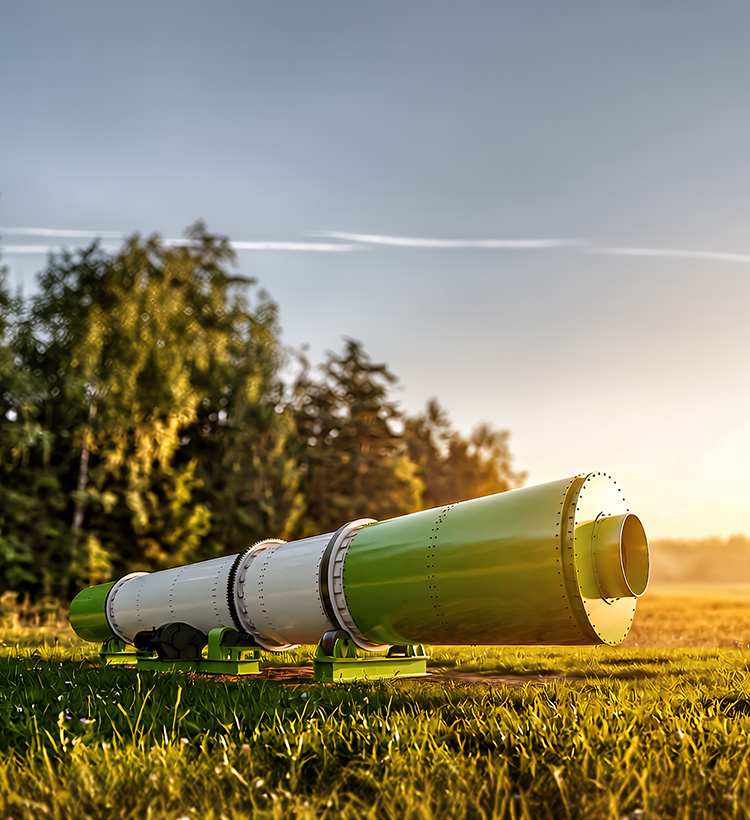
A drying system can reduce moisture to a level suitable for the subsequent process.
For some production systems, a 2-3 T/H wood pellet production line for sale may provide a useful reference when evaluating how wood-processing sections are combined, although cat litter production requirements should be calculated separately according to the final product.
Moisture management is especially important because it influences:
- Pellet formation
- Strength
- Storage
- Dust generation
- Drying requirements
- Packaging stability
Stage Four: Mixing and Formulation
Not every cat litter product uses a single raw material.
Some formulas combine several ingredients.
For example, a plant-based product may contain a primary fiber source plus starch or another binder.
Mixing ensures that the ingredients are distributed throughout the batch.
The purpose is consistency.
If the formulation varies from one part of the batch to another, the finished product may also vary.
For this reason, weighing and batching can become increasingly important as the number of ingredients increases.
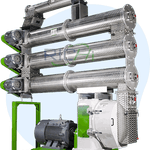
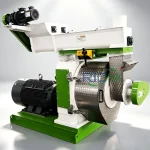
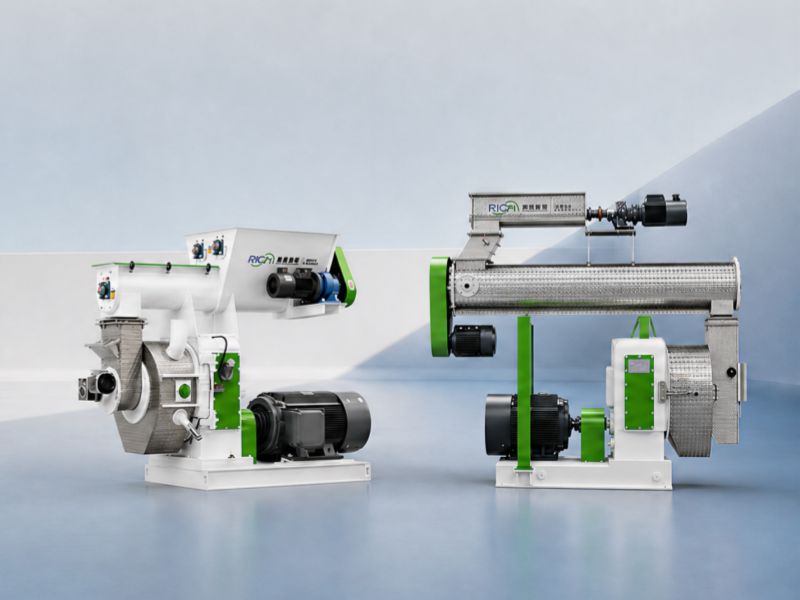
Stage Five: Pelletizing
This is the stage most people associate with pellet production.
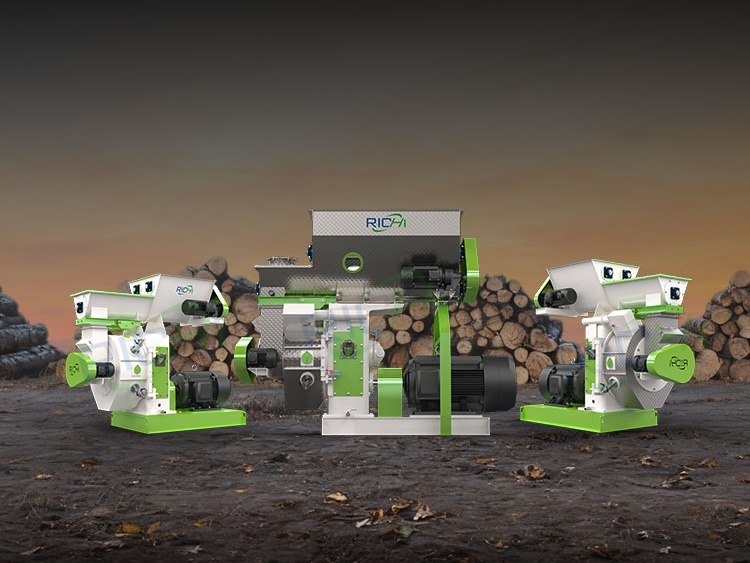
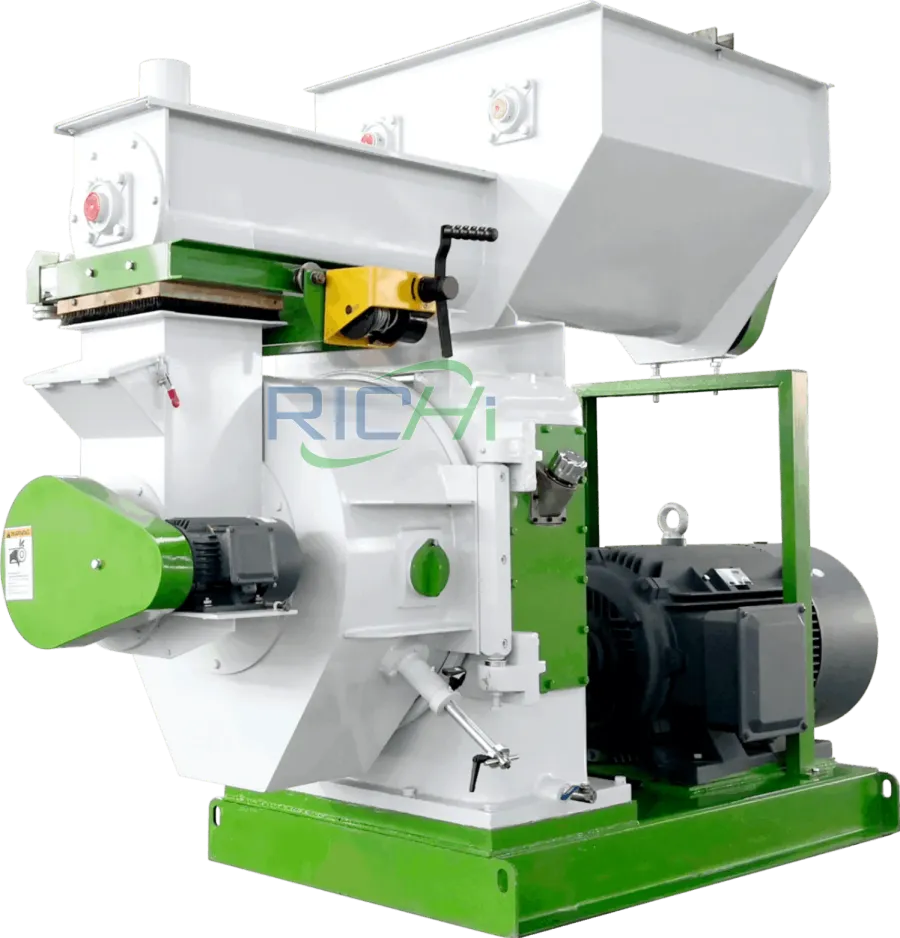
Prepared material enters the pelletizing machine, where mechanical pressure forms it into compact pieces.
The final pellet dimensions depend on the die and process configuration.
Different products may require different:
- Diameters
- Lengths
- Densities
- Shapes
A manufacturer should define these requirements before selecting the pelletizing equipment.
(Related Post:https://www.richipelletmill.com/cat-litter-pellet-machine/)
The pelletizing stage also produces heat through mechanical compression and friction.
This affects the condition of the material as it leaves the machine.
Stage Six: Drying the Formed Product
Depending on the formulation and process, the newly formed pellets may require additional drying.
This stage should not simply be viewed as “making the pellets dry.”
The dryer needs to provide controlled heat and airflow while maintaining product integrity.
Excessively aggressive drying may affect the physical structure of some products.
Insufficient drying can create storage and packaging problems.
The actual drying strategy therefore depends on the material and product specification.
Stage Seven: Cooling
After drying, the pellets are usually too warm for immediate packaging.
Cooling allows the product to reach a more suitable temperature.
This stage can also help stabilize the pellets before they are transferred to the screening and packaging sections.
A cooling system must be sized according to the actual product flow.
If the cooler is too small, it can become a bottleneck.
If it is significantly oversized, the investment and footprint may increase without providing proportional benefits.
Stage Eight: Screening
Now comes a stage that consumers rarely think about.
Screening.
A finished batch may contain:
- Correctly formed pellets
- Broken pieces
- Fine particles
- Oversized particles
A screening machine separates these fractions.
The qualified product continues to packaging.
The remaining material can potentially be recycled into the production process depending on the formula and system design.
This helps improve product consistency.
Stage Nine: Packaging
At this point, the product is finally ready for packaging.
Packaging systems may include:
- Weighing
- Bag filling
- Bag sealing
- Labeling
- Palletizing
The correct packaging format depends on the target market.
Retail products may require small bags.
Wholesale customers may prefer larger formats.
Private-label customers may have their own specifications.
Therefore, packaging should be designed around the commercial strategy.
Stage Ten: Storage and Distribution
Production does not end when the bag is sealed.
Finished products need to be stored in suitable conditions before shipment.
The warehouse should consider:
- Moisture
- Temperature
- Packaging integrity
- Pallet arrangement
- Inventory rotation
Good warehouse management helps protect the product after it leaves the production line.
What Happens When Production Goes Wrong?
Understanding the complete process also makes troubleshooting easier.
Suppose the finished product contains too much powder.
Possible causes could include:
- Weak pellet formation
- Incorrect moisture
- Poor raw-material preparation
- Excessive mechanical handling
- Inadequate screening
If the product contains too much moisture, the problem may involve:
- Raw-material moisture
- Dryer settings
- Insufficient residence time
- Uneven airflow
If production output is lower than expected, possible causes may include:
- Feeding instability
- Raw-material characteristics
- Incorrect particle size
- Pelletizing conditions
- Dryer bottlenecks
- Cooling limitations
This demonstrates why troubleshooting should look at the entire production line rather than automatically blaming the pellet mill.
Why Factory Layout Matters
Material should ideally move logically through the factory.
A typical flow is:
Raw materials
↓
Preparation
↓
Mixing
↓
Pelletizing
↓
Drying
↓
Cooling
↓
Screening
↓
Packaging
↓
Finished goods
Unnecessary backtracking increases conveying distance and complicates production.
The plant should also provide sufficient maintenance access around major machines.
Operators need room to inspect equipment, replace wear parts and clean the system.
What Should Buyers Ask Before Ordering Equipment?
A serious equipment inquiry should include more than:
“Please send price.”
Useful information includes:
- Raw material
- Raw-material moisture
- Particle size
- Target capacity
- Desired pellet diameter
- Product type
- Formula
- Packaging format
- Working hours per day
- Available workshop size
With these details, an equipment manufacturer can make a much more meaningful proposal.
Why Supplier Experience Matters
Cat litter production combines several processing technologies.
The supplier may need to understand crushing, mixing, pelletizing, drying, cooling, screening and packaging.
A company such as Richi Pellet Mill can therefore be evaluated according to the broader engineering solution rather than the pellet machine alone.
The goal is to ensure that each section of the line can handle the output of the previous section.
The Real Product Is the Entire Process
A factory does not sell a pelletizing machine.
It sells cat litter.
That distinction is important.
The customer ultimately cares about the finished product:
- Does it have consistent size?
- Does it generate excessive dust?
- Does it absorb effectively?
- Does it remain stable during transportation?
- Is the packaging accurate?
- Can the factory produce it consistently?
The answers depend on the entire production chain.
Businesses looking for additional information about equipment selection and production planning can helpful resources before moving into detailed project discussions.
A successful cat litter factory therefore begins not with a single machine, but with a clear understanding of the journey from raw material to finished bag.