


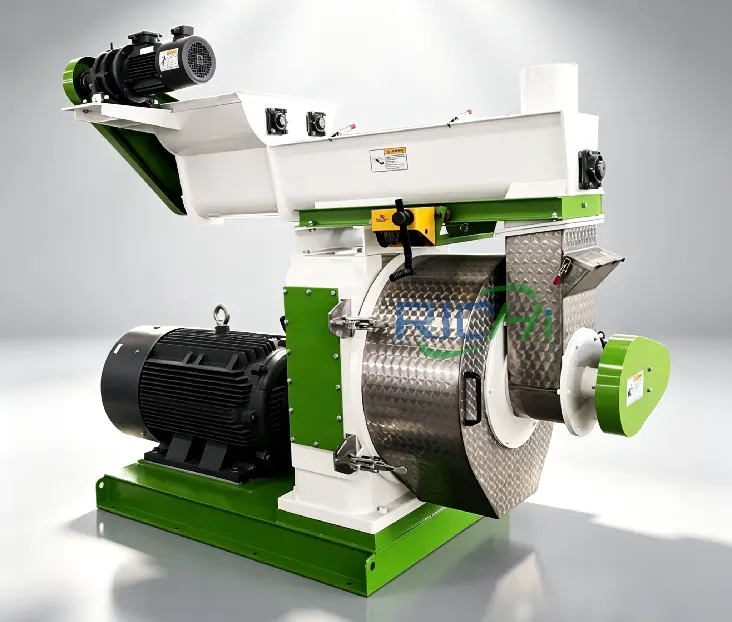
Cow dung is often regarded simply as an agricultural waste, but in livestock-producing regions, it can become a useful resource when it is collected, processed, and managed properly. Instead of leaving manure in open piles, farmers and small processing businesses can convert it into dried fuel cakes, fertilizer products, compost, or pellets.
The basic idea is relatively simple: reduce excessive moisture, improve the physical form of the material, and create a product that is easier to store, transport, and use. However, achieving stable results requires more than simply pressing fresh manure into a shape. Moisture, fiber content, particle size, drying conditions, and the intended end use all influence the processing method.
This article explains how cow dung can be processed into solid products, what equipment is normally involved, how moisture affects forming, and what should be considered when planning a small or medium-scale processing system.
Why Is Cow Dung Suitable for Solid-Form Processing?
Cow manure contains a mixture of partially digested plant fibers, water, microorganisms, minerals, and organic matter. Its composition changes depending on the animals’ diet, bedding materials, collection method, and storage conditions.
Because of its fibrous structure, manure can sometimes be formed into relatively stable shapes after suitable moisture adjustment. Once dried, the material becomes considerably easier to handle than fresh manure. This makes dried manure products suitable for several applications, including traditional household fuel in some regions and soil amendment or organic fertilizer production.
However, not every batch of manure behaves in the same way. Fresh manure may contain a very high percentage of water, while manure collected from bedding may contain straw, husks, sawdust, or other dry materials. Therefore, the processing method should be selected according to the actual raw material rather than based only on the product name.
The first step in any project is therefore to understand the material.
What Happens Before the Manure Reaches the Forming Stage?
Fresh cow dung normally needs preliminary treatment before mechanical forming. Collection is followed by removing stones, metal pieces, excessive bedding, and other foreign materials that could interfere with downstream equipment.
If the manure contains long fibers or large lumps, size reduction may also be necessary. A crusher or grinder can help make the material more uniform, although the required particle size depends on the final product.
Moisture control is usually the most important preparation step. Material that is too wet may stick to equipment and fail to maintain its shape. Material that is excessively dry, on the other hand, may have poor cohesion during forming.
For this reason, drying and moisture adjustment should be considered part of the overall process rather than as an afterthought.
How Does a Cow Dung Cake Machine Work?
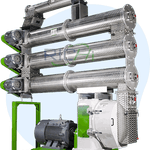
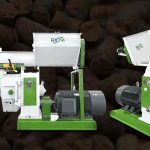
A cow dung cake machine is generally designed to compress prepared manure into a particular shape and size. The basic principle is mechanical pressure: loose material is fed into a forming chamber, compressed, and discharged as a denser solid.
Different designs may produce round, square, disc-shaped, or other forms. The choice is often influenced by local usage habits and drying conditions.
The machine itself does not solve every raw-material problem. If manure enters the machine with excessive moisture, inconsistent particle size, or too many foreign objects, the final product may be irregular or difficult to remove from the forming chamber.
A more reliable approach is to treat the forming machine as one part of a processing chain. Raw-material preparation, moisture adjustment, forming, drying, cooling, and storage should be considered together.
Does Moisture Really Matter That Much?
Yes. Moisture has a direct influence on both forming performance and the quality of the finished product.
When manure contains too much water, mechanical compression may produce a soft product that deforms easily. Drying also becomes more energy-intensive because a large quantity of water must first be removed.
If the material is too dry, however, it may not bind properly. The formed product can crack or break during handling.
There is therefore no universal moisture percentage that works for every cow-dung processing project. The appropriate range depends on the manure composition, forming equipment, product dimensions, and drying method.
A practical way to determine the right condition is to test representative batches before finalizing equipment specifications.
Should Fresh Cow Dung Be Dried Before Forming?
In many cases, some degree of moisture reduction is necessary. The exact method depends on the scale of the project and the available climate conditions.
Sun drying is commonly used where land, sunlight, and suitable weather are available. It requires relatively simple infrastructure but also depends heavily on climate. Rainfall, humidity, and seasonal changes can make outdoor drying inconsistent.
Mechanical drying provides greater control and can be useful where continuous production is required. However, it increases energy consumption and equipment costs.
Some systems combine natural pre-drying with mechanical drying. This approach can reduce the amount of water that the dryer needs to remove while maintaining a more stable processing schedule.
The most appropriate method depends on local weather, production capacity, labor availability, and the value of the final product.
Can Cow Manure Be Used for Fertilizer Pellets Instead?
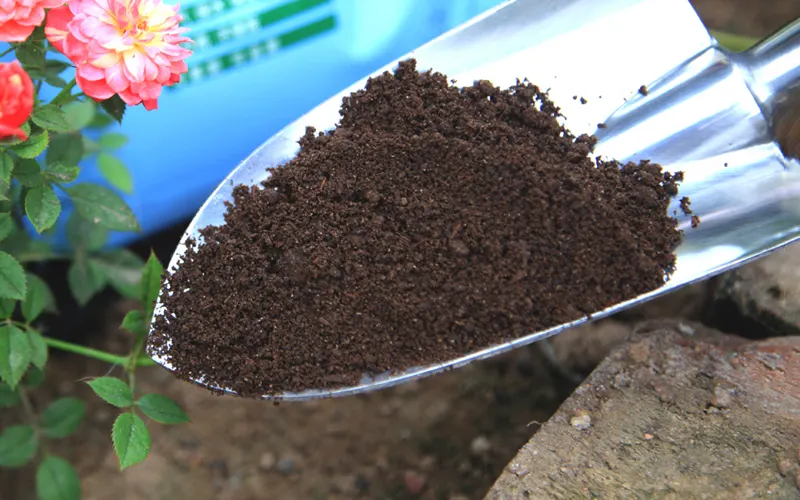
Yes. Not every manure-processing project needs to produce traditional cakes. Cow manure can also be processed into granular or pelletized organic fertilizer after suitable composting and conditioning.
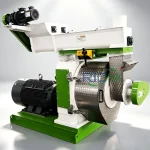
A compost pellet machine for cow manure is normally used after the manure has undergone appropriate biological treatment and moisture adjustment. The purpose is different from simply forming fresh manure into fuel cakes.
For fertilizer production, composting is especially important because raw manure is biologically active and may contain excessive moisture and unstable organic compounds. Proper composting helps transform the material into a more mature organic fertilizer feedstock.
After composting, crushing, mixing, moisture adjustment, and pelletizing may be used to create a more uniform product.
What Is the Difference Between Dung Cakes and Fertilizer Pellets?
Although both products originate from manure, their processing objectives are different.
Dung cakes are generally designed as a simple solid fuel or traditional agricultural product. Their value is closely related to drying characteristics, combustion behavior, handling convenience, and local usage.
Organic fertilizer pellets, in contrast, are designed primarily for soil application. Their processing focuses on nutrient distribution, maturity, particle uniformity, storage stability, and application convenience.
This difference affects the entire production process.
A fuel-oriented system may emphasize forming and efficient drying, while a fertilizer-oriented system normally places greater emphasis on composting, nutrient management, screening, mixing, and pellet quality.
Trying to use exactly the same process for both products may therefore lead to unnecessary complications.
How Should Cow Manure Be Prepared for Processing?
Raw-material preparation should begin with collection and sorting. Foreign materials should be removed as early as possible because stones, pieces of metal, and other hard objects can damage mechanical equipment.
The manure can then be broken into smaller pieces if necessary. If straw or other fibrous materials are present, their proportion should also be evaluated.
For fertilizer production, composting is usually a key stage. The manure may be mixed with suitable carbon-rich materials to achieve better composting conditions. Depending on the raw material, these may include crop residues, straw, sawdust, or other biodegradable materials.
The objective is not simply to reduce the smell or volume of manure. Proper composting creates a more stable material that is easier to process and more suitable for agricultural use.
Does Cow Dung Need Additional Materials?
Not necessarily, but adding dry or fibrous materials can sometimes improve processing characteristics.
Fresh cow manure can contain considerable moisture. Mixing it with relatively dry biomass may reduce overall moisture and change the texture of the feedstock.
For fertilizer production, different organic materials can also be combined to adjust physical properties or nutrient characteristics. However, the formulation should be based on actual material analysis rather than arbitrary ratios.
For example, adding excessive amounts of one material simply to make the mixture easier to process may reduce the proportion of manure and change the characteristics of the final fertilizer.
A sensible formulation begins with the intended product and works backward toward the raw-material requirements.
What Equipment Is Normally Needed?
The equipment configuration depends heavily on the final product.
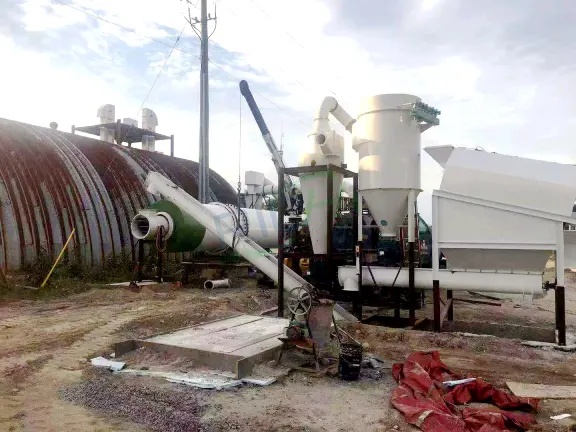
A basic manure-processing system may include a receiving area, sorting equipment, crushing equipment, drying equipment, a forming or pelletizing machine, and a packaging or storage section.
A fertilizer-oriented line can contain additional stages, such as composting, fermentation management, screening, mixing, granulation, drying, cooling, and final screening.
Not every project requires every machine. For example, a farm processing its own manure for local use may not need automatic packaging equipment. A commercial fertilizer producer selling standardized products may require much more precise material handling and quality control.
This is why production capacity should not be the only factor used when selecting equipment.
How Large Should a Processing Line Be?
The appropriate capacity depends on the amount of manure available and the expected operating schedule.
Suppose a farm produces a relatively small amount of manure every day. Building a very large continuous processing line may result in underutilized equipment and unnecessarily high investment.
On the other hand, a commercial operation receiving manure from several farms may need continuous feeding, larger drying capacity, automated conveying, and larger storage facilities.
Capacity should therefore be calculated from the actual daily or monthly manure supply.
It is also useful to consider seasonal fluctuations. Livestock numbers, rainfall, bedding practices, and manure collection systems can all affect the available quantity and moisture content.
What About the Drying Stage?
Drying is often one of the most important and energy-intensive stages of manure processing.
For outdoor drying, the available floor area should be sufficient for spreading the material into relatively thin layers. Turning the material periodically can improve drying uniformity.
Mechanical dryers provide more consistent conditions, but their energy requirements depend on the initial moisture content and desired final moisture.
A useful principle is to remove as much moisture as practical through low-cost preliminary methods before relying heavily on thermal drying. This can improve overall energy efficiency.
The final moisture level should also match the intended product. A product that is going to be stored for a long period generally requires more careful moisture control than material that will be used immediately.
How Can Product Quality Be Kept Consistent?
Consistency starts with consistent raw materials.
If one batch contains much more water than another, the same machine settings may produce different results. Similarly, changes in fiber content can influence forming pressure and product strength.
For this reason, simple quality checks can be valuable. Operators can monitor moisture, particle size, product dimensions, density, and breakage rate.
For fertilizer products, additional laboratory testing may be appropriate. Nutrient content, organic matter, moisture, pH, and maturity can be important depending on local regulations and intended application.
Quality control does not always require complicated technology. Regular sampling and record keeping can already reveal significant changes in the production process.
Is a Small-Scale Project Practical?
A small-scale manure-processing project can be practical when there is a stable source of raw material and a clear use for the finished product.
For farms, the main advantage may be waste reduction and improved manure handling. Instead of transporting loose, wet manure, the processed material can be stored in a more manageable form.
For small fertilizer businesses, the economic question is more complex. Equipment investment, labor, drying costs, packaging, transportation, composting time, and local demand all need to be considered.
The product should therefore be defined before the equipment is selected.
If the objective is household fuel, the process can remain relatively simple. If the objective is commercial organic fertilizer, a more complete treatment and quality-control system may be required.
What Should Be Considered When Choosing Equipment?
Equipment selection should begin with the raw material rather than with a machine catalog.
Important questions include:
- How much manure is available each day?
- What is the typical moisture content?
- Does the manure contain straw or bedding?
- Is the product intended for fuel or fertilizer?
- How much land is available for natural drying?
- Is continuous production required?
- What final product size is desired?
- How will the finished product be stored?
- What local environmental or fertilizer regulations apply?
These questions can help narrow down the appropriate equipment configuration.
It is also useful to conduct material tests before purchasing a complete system. A test can reveal whether additional crushing, mixing, drying, or conditioning is necessary.
How Does Storage Affect the Final Product?
Storage is sometimes overlooked during project planning, even though it can directly influence product quality.
Dried manure products can absorb moisture from humid air. If stored on a wet floor or in an unprotected area, the product may gradually become softer and less stable.
For fertilizer pellets, moisture absorption can also cause pellets to lose mechanical strength or become difficult to handle.
A dry, ventilated storage area with protection from rain and ground moisture is therefore important. Packaging can provide additional protection when products need to be transported over long distances.
Storage capacity should also be matched to production. Producing material faster than it can be stored, dried, or sold can create bottlenecks elsewhere in the system.
Can the Same Line Handle Other Animal Manures?
In some cases, equipment can process different types of animal manure, but this should not be assumed automatically.
Pig manure, poultry manure, horse manure, and cow manure differ in moisture, fiber structure, nutrient composition, and particle characteristics.
Poultry manure, for example, may be much drier and more concentrated than fresh cattle manure. Horse manure may contain a significant amount of bedding material. These differences can influence grinding, composting, drying, and pelletizing requirements.
A multi-material processing system should therefore be designed around the characteristics of all intended raw materials.
Testing several representative materials before final equipment selection is usually more reliable than assuming that one set of operating parameters will work for everything.
Is Automation Necessary for a Manure Processing Line?
Automation is useful when production volume is high or when labor availability is limited, but it is not automatically necessary for every project.
A small farm may operate with manual feeding, simple conveyors, and basic drying facilities. A larger commercial plant may use automated feeding, temperature and moisture monitoring, automatic weighing, and centralized control.
The purpose of automation is to improve process consistency and reduce repetitive labor. It should be introduced where it solves a real operational problem.
For a new project, it can be sensible to establish the basic processing route first and then identify which stages would benefit most from automation.
What Should Be Checked Before Building the Project?
Before construction begins, several practical factors should be evaluated.
The site needs enough space for raw-material reception, processing equipment, drying, finished-product storage, vehicle movement, and maintenance access.
Drainage is particularly important when handling fresh manure. The site should be designed to prevent uncontrolled wastewater or manure runoff.
Ventilation should also be considered because manure processing can generate dust, moisture, and odors. Workers should have appropriate protective equipment, especially during crushing, screening, and dry-material handling.
Electrical capacity, water supply, fuel availability, and transportation access should also be reviewed before finalizing the layout.
For those comparing equipment suppliers or processing concepts, this hyperlink can be used as a reference point when reviewing related manure-processing information. The important point is to compare the actual process requirements rather than focusing only on individual machine specifications.
How Long Does It Take to Build a Small Manure Processing System?
There is no universal construction period because project complexity varies considerably.
A simple setup based on purchased individual machines may be installed relatively quickly once the site is prepared. A larger automated system may require more time for foundation work, equipment manufacturing, transportation, installation, electrical connection, commissioning, and operator training.
Site preparation can sometimes take longer than expected. Concrete foundations, drainage, storage buildings, electrical systems, and drying areas should therefore be considered in the project schedule.
For this reason, a realistic project plan should divide the work into several stages instead of estimating the entire construction period from equipment delivery alone.
What Role Does Equipment Design Play in Long-Term Operation?
Machine design affects not only initial processing performance but also maintenance and operating costs.
A machine that is easy to clean, inspect, and maintain can reduce downtime. Components exposed to abrasive materials should be selected appropriately, while bearings and other moving parts need suitable protection from dust and moisture.
Spare parts availability is another practical consideration. A relatively inexpensive machine may become difficult to operate if critical replacement parts are unavailable.
For larger projects, companies such as pellet press may be considered among equipment manufacturers offering machinery for biomass, fertilizer, and feed-related processing applications.
However, supplier selection should still be based on technical suitability, after-sales support, spare-parts availability, project experience, and the actual requirements of the planned plant.
What Is the Main Lesson From Cow Dung Processing?
The most important point is that manure processing is not simply a matter of pressing waste into a desired shape.
The quality of the final product is influenced by the entire chain: collection, sorting, moisture adjustment, particle preparation, biological treatment where necessary, forming, drying, cooling, storage, and quality control.
A small farm may only need a simple drying and forming solution, while a commercial organic fertilizer project may require a complete composting and pelletizing system.
Understanding the raw material and defining the final product should therefore come before selecting machinery.
Cow dung can become a useful agricultural resource when it is handled systematically. Whether the final product is a traditional dried cake, an organic fertilizer pellet, or another form of processed biomass, the basic principles remain the same: control moisture, maintain consistent material quality, choose equipment according to the actual process, and design the system around the final application.
In this way, manure management can move beyond simple waste disposal and become part of a more organized approach to resource recovery, soil improvement, and biomass utilization.