

Goat farming requires a reliable supply of nutritious feed throughout the year. Pasture and forage can provide part of the diet, but seasonal changes, limited grazing areas, and increasing herd sizes often make prepared feed necessary. For farms that want greater control over feed quality and production costs, pelletizing forage and concentrated ingredients can be an effective approach.
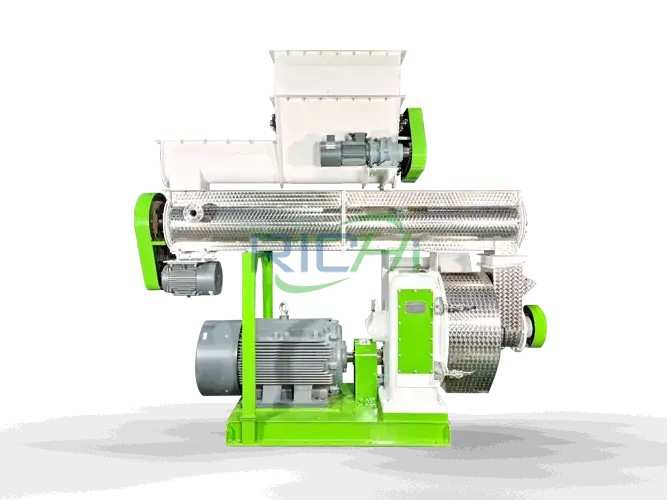
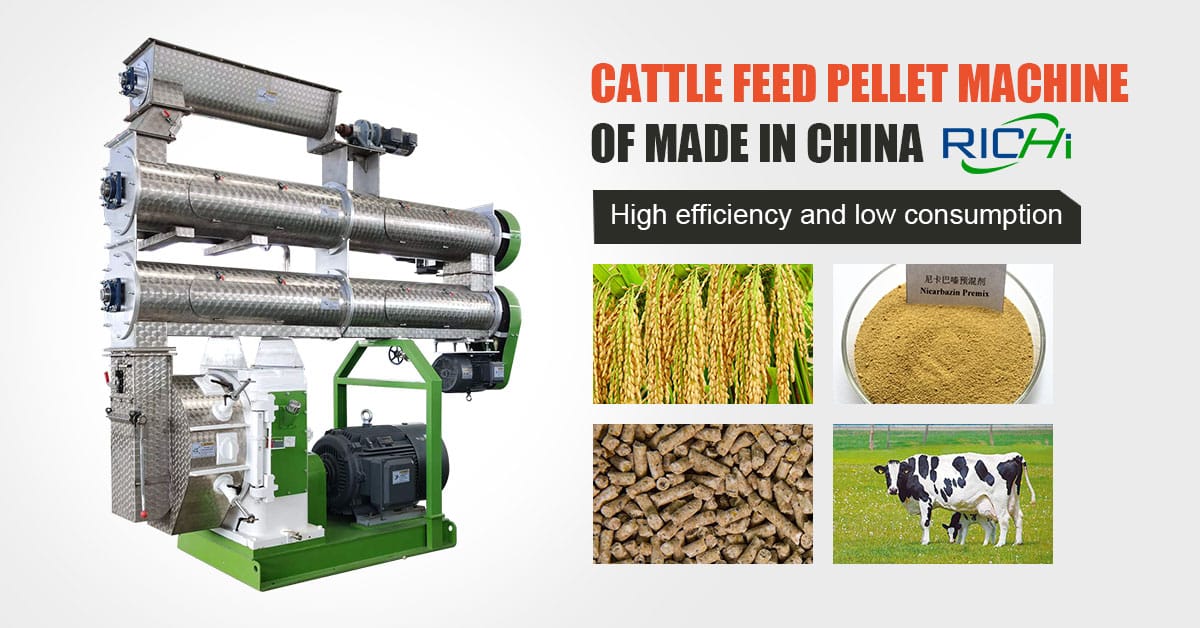
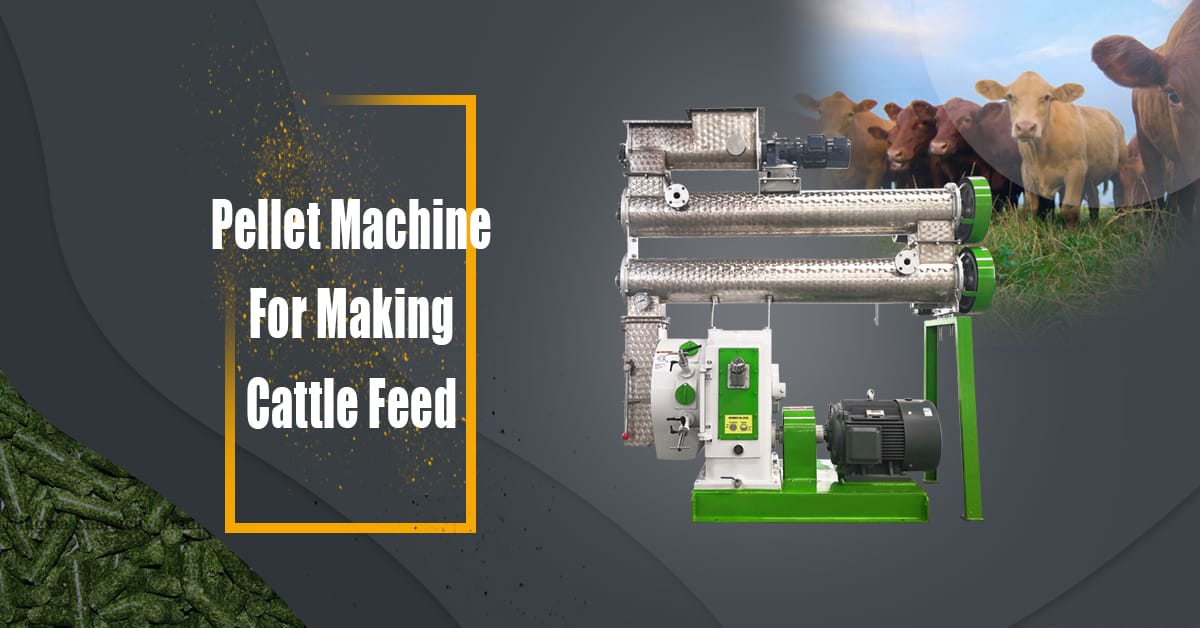
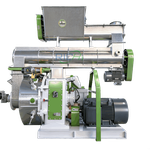
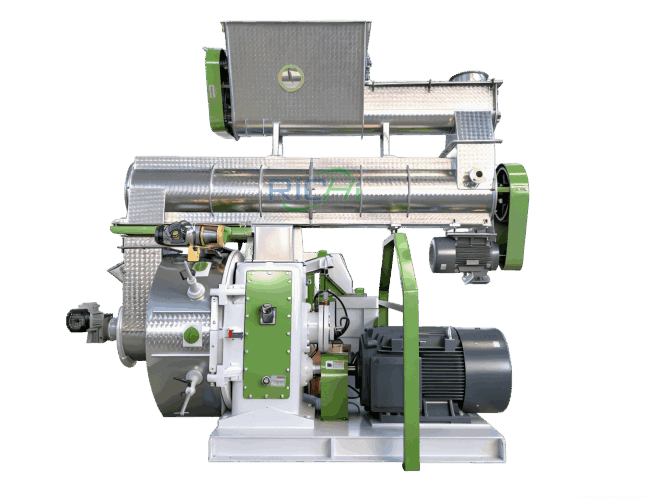
A goat feed pellet making machine for sale can compress materials such as alfalfa, grass, corn, soybean meal, wheat bran, straw, and other feed ingredients into uniform pellets. Compared with loose feed, pellets are easier to measure, transport, store, and distribute among animals.
However, selecting a pellet machine should not begin with price alone. Farm size, raw material condition, required output, pellet diameter, electricity availability, and future expansion all need to be considered.
Why Do Goat Farms Use Feed Pellets?
Use up and down arrow keys to resize the meta box pane.
Goats are adaptable animals and can consume many types of forage and agricultural by-products. However, loose materials can be difficult to handle when several ingredients need to be combined into a balanced ration.
Pellets provide a more consistent physical form. When ingredients are properly formulated and mixed, each portion can contain a relatively uniform combination of forage, protein sources, grains, minerals, and other nutritional components.
Pellets can also reduce selective feeding. When different ingredients are offered separately, animals may consume preferred ingredients first and leave others behind. A properly formulated pellet combines the ingredients into one product.
For commercial goat farms, this can simplify feeding management and make daily feed distribution more convenient.
What Raw Materials Can Be Pelletized?
A goat feed pellet machine can process a wide range of agricultural materials, but the exact configuration depends on the raw material.
Common forage materials include alfalfa, grass, hay, clover, corn stalks, wheat straw, and other crop residues.
Concentrated ingredients can include corn, soybean meal, wheat bran, rice bran, and other grains or protein sources.
Minerals and premixes may also be included in small quantities depending on the feed formula.
The moisture content and particle size of these materials are important. Long, fibrous forage generally needs to be cut and crushed before pelletizing. Very dry materials may also require moisture adjustment to improve pellet formation.
Why Is Raw Material Preparation Important?
Raw material preparation can have a major effect on pellet quality.
Long hay or grass cannot always be fed directly into a conventional pellet mill. A cutter or hammer mill may first reduce the material to a suitable size.
A consistent particle size allows the ingredients to mix more evenly and helps the pellet mill compress the material more consistently.
For high-fiber formulas, the feeding system is also important. Fibrous material may have poor flowability, so a suitable feeding arrangement can help maintain stable material flow into the pellet mill.
If several ingredients are used, they should be weighed and mixed before pelletizing.
How Does the Pelletizing Process Work?
After preparation and mixing, the feed enters the pellet mill through a controlled feeding system.
The pellet mill uses mechanical pressure to compress the feed material through holes in a die. As the compressed material exits the die, a cutter divides it into pellets.
The die hole diameter determines the approximate pellet diameter. Pellet length can be adjusted by changing the cutting position and speed.
Goat feed can be produced in different pellet sizes according to the animals’ age, feeding method, and farm requirements.
For example, younger goats may require smaller particles, while mature animals can generally consume larger pellets.
The production process should therefore be planned around the intended feed specification rather than using one pellet size for every application.
How Does Capacity Affect Equipment Selection?
Capacity is one of the most important factors when choosing a pellet machine.
A small family farm may only need several hundred kilograms of feed per hour, while a commercial goat farm with a large herd may require a higher-capacity production line.
The correct capacity can be estimated from daily feed consumption.
Suppose a farm needs several tons of finished feed per day. The owner can calculate the required hourly production based on available operating hours.
It is usually better to include some spare capacity because actual production time is affected by cleaning, maintenance, material changes, and other interruptions.
A machine that operates continuously at its maximum theoretical output may not be the most practical choice.
Should Forage and Concentrate Be Pelletized Together?
They can be combined when the feed formula is designed for this purpose.
Forage pellets may contain a high proportion of alfalfa, grass, hay, or crop residues. Concentrated goat feed can contain more grains and protein ingredients.
The final formulation determines how the materials should be processed.
For farms producing both forage pellets and concentrated feed, separate formulas may require different die specifications or production settings.
In some cases, the same pelletizing system can process different formulas after appropriate cleaning and adjustment. However, producers should confirm equipment compatibility before purchasing.
What About Other Livestock Feed?
The same general pelletizing technology can be applied to other livestock feed, but the formulation and raw material requirements are different.
For example, a horse feed pellet machine for small farm may process alfalfa, grass, grains, and other ingredients for equine feed. Horse feed often requires different nutritional formulations and pellet characteristics from goat feed.
This illustrates why equipment should be selected based on the intended animal and formula rather than simply choosing a machine because it can produce pellets.
Different livestock may require different pellet diameters, density, hardness, and ingredient combinations.
What Auxiliary Equipment May Be Needed?
A small goat feed project does not necessarily need a fully automated factory.
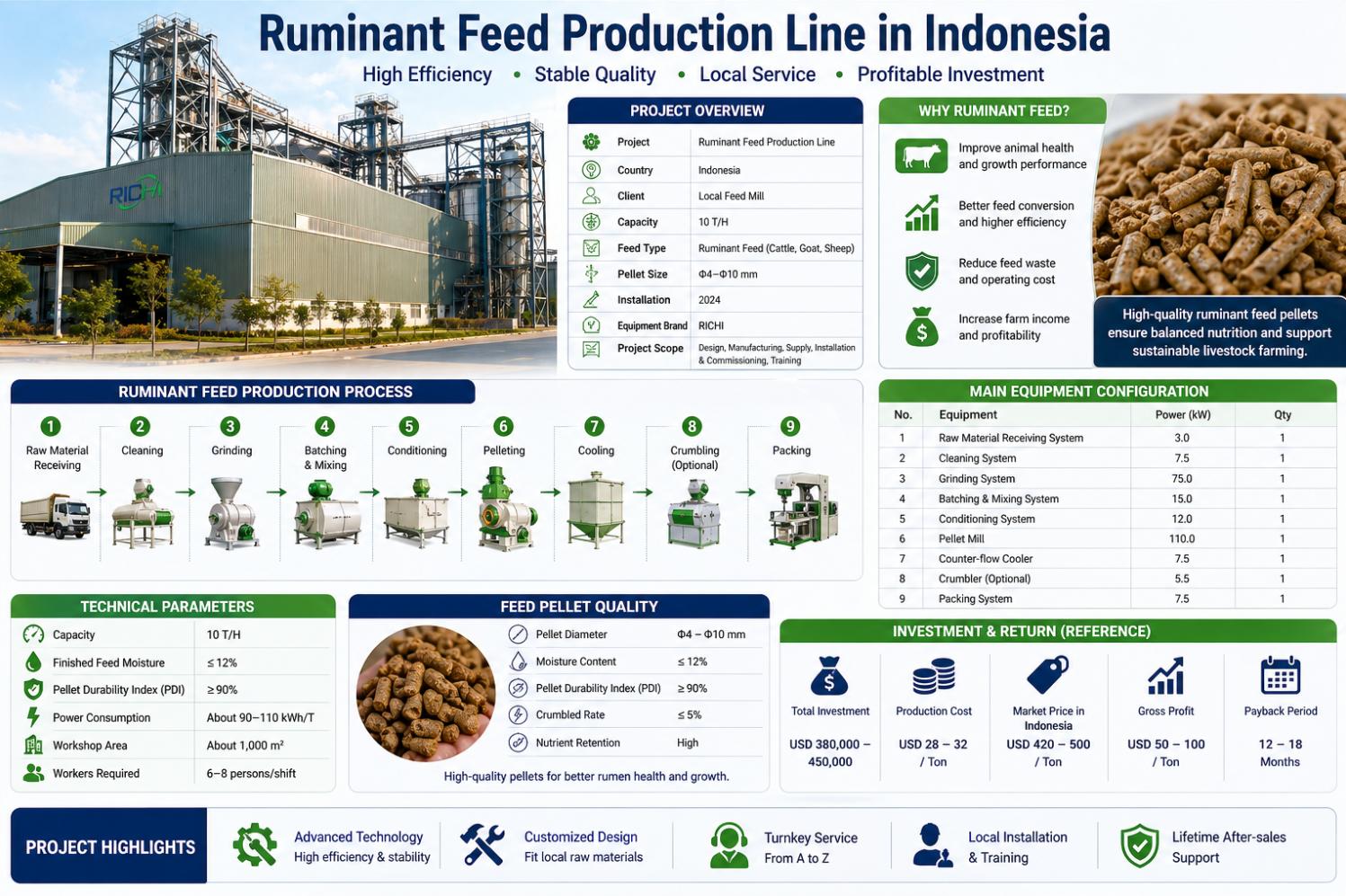
A basic system can include a crusher or hammer mill, feed mixer, pellet mill, cooler, screener, and conveyors.
The crusher prepares forage and other coarse materials. The mixer combines ingredients according to the formula. The pellet mill forms the feed into pellets.
After pelletizing, cooling reduces the temperature of fresh pellets. Screening separates fines and oversized particles before the finished feed is transferred to storage or packaging.
Larger commercial farms may add automatic batching, silos, computerized controls, and automatic packing systems.
The equipment should be matched according to production capacity. An oversized pellet mill combined with an undersized mixer can restrict the entire production process.
Does Moisture Matter?
Moisture is an important factor in pellet production.
If forage or other feed ingredients are excessively dry, the material may not bind effectively during compression. Excessive moisture can also create problems during pellet formation and cooling.
The ideal moisture condition depends on the raw material and formulation.
For this reason, suppliers should evaluate the actual material before recommending a final equipment configuration.
Fresh grass, dried hay, alfalfa meal, and crop straw do not behave identically during pelletizing.
If the farm uses seasonal forage, the moisture characteristics can also change throughout the year.
How Can Pellet Quality Be Improved?
Good pellet quality begins with consistent raw material preparation.
Grinding should produce an appropriate particle size, while mixing should distribute ingredients evenly.
The pellet mill should then operate with stable feeding and suitable die compression.
After pelletizing, proper cooling and screening help improve the finished product.
Storage also matters. Finished pellets should be protected from moisture because excessive humidity can affect physical quality and storage stability.
For commercial production, regular monitoring of pellet durability, size, moisture, and appearance can help identify processing problems early.
What Should a Buyer Check Before Purchasing?
Before requesting a quotation, a goat farm should prepare several basic pieces of information.
First, identify the raw materials that will actually be used. Next, determine the target daily output and preferred pellet diameter.
The buyer should also provide information about available electricity, factory space, working hours, and whether the feed will be used internally or sold commercially.
A supplier should then recommend the appropriate pellet mill and auxiliary equipment.
Buyers should compare not only motor power and capacity but also die specifications, feeding system, bearings, control system, spare parts, installation, and technical support.
For a complete project, an experienced Richi manufacture team can evaluate the raw material and production requirements before determining the equipment configuration.
How Can Small Farms Control Their Initial Investment?
Small farms can reduce their initial investment by starting with the equipment that is actually required.
A simple production line may include a crusher, mixer, pellet mill, cooler, and screener.
Automatic weighing and packaging can be added later if production expands.
This modular approach allows a farm to gain experience with pellet production before investing in more advanced automation.
Factory layout is also important. Even a small project should reserve sufficient space for raw material storage, production equipment, finished-feed storage, and future expansion.
A poorly planned layout can increase labor requirements because materials have to be moved repeatedly between different areas.
Can One Machine Produce Different Goat Feed Formulas?
In many cases, the same pellet mill can process several formulas, provided the materials and pellet specifications are compatible with the equipment.
However, changing formulas requires proper cleaning and adjustment.
Different formulas may also require different die specifications.
For example, a high-forage formula may behave differently from a grain-rich concentrate formula. The feeding rate, moisture condition, and compression requirements can change accordingly.
Therefore, farms producing several types of goat feed should discuss all intended formulas with the supplier before purchasing the machine.
What About Future Expansion?
Future production should be considered when choosing the initial system.
A farm may start with a small herd but expand significantly over several years. If feed production is expected to grow, selecting equipment with moderate additional capacity can provide more flexibility.
The factory layout should also leave room for additional crushers, mixers, pellet mills, storage bins, or packaging equipment.
Electrical and material-handling systems should be considered in the same way.
This approach can reduce the cost and disruption of future expansion.
Final Thoughts
Choosing goat feed pellet equipment requires a balance between raw material characteristics, herd size, production demand, pellet specifications, and investment budget.
A properly configured system can process forage, grains, protein ingredients, and agricultural residues into uniform feed pellets that are easier to handle and distribute.
The most important point is to evaluate the complete production process instead of choosing a pellet mill based only on its advertised capacity.
For farms comparing different equipment configurations, read more about livestock feed processing, pellet production systems, and machinery selection before making a final investment decision.
A well-planned goat feed pellet project can start with a relatively simple setup and expand as the farm’s feed demand increases. By matching each machine to the actual production requirement, farmers can improve processing efficiency while avoiding unnecessary equipment investment.
Related post:https://pelletizerequipment.com/sheep-feed-pellet-machine/