
The global pet-care industry has created new opportunities for manufacturers of cat litter. As more households keep cats and consumers become increasingly selective about pet-care products, demand has expanded beyond traditional clay litter to include tofu, wood, corn, cassava, paper, and other plant-based alternatives.
Starting a cat litter production business can therefore be an attractive manufacturing opportunity, especially in regions where suitable raw materials such as bentonite, sawdust, soybean residue, corn fiber, or agricultural by-products are readily available. However, successful production requires more than purchasing a pellet machine. Entrepreneurs need to evaluate the market, select appropriate raw materials, develop a competitive product, design the production process, choose suitable cat litter production equipment, and establish reliable quality-control and packaging systems.
This article provides a step-by-step guide to starting a cat litter production business, from market research and raw material selection to factory construction, equipment investment, production, packaging, and sales.
1. Understand the Cat Litter Market
Before investing in equipment, the first step is understanding the target market.
Cat litter consumers generally care about several characteristics:
- Absorption
- Odor control
- Clumping performance
- Low dust
- Low tracking
- Lightweight handling
- Easy cleaning
- Pellet or granule consistency
- Price
- Packaging
- Environmental characteristics
Different markets may have very different preferences.
For example, some consumers prefer traditional bentonite clumping litter because of its strong clumping performance. Others prefer tofu or wood litter because they are looking for plant-based products.
Therefore, entrepreneurs should not simply produce whatever product is easiest to manufacture. The product should be selected based on local demand and competitive positioning.
2. Choose the Type of Cat Litter
One of the most important decisions is determining which cat litter product to manufacture.
Bentonite Cat Litter
Bentonite is widely used for clumping cat litter. It can provide good absorption and clumping characteristics when properly processed.
Tofu Cat Litter
Tofu cat litter is generally produced from soybean residue or soybean fiber, often combined with starch and other functional ingredients.
Wood Cat Litter
Wood litter can be produced from sawdust, wood shavings, wood fiber, or suitable wood-processing residues.
Corn Cat Litter
Corn-based materials can be processed into plant-based absorbent litter.
Cassava Cat Litter
Cassava starch and fiber may be used in certain biodegradable formulations.
Paper Cat Litter
Paper fiber can also be processed into absorbent particles.
Each product requires a different manufacturing process and equipment configuration.
3. Identify Available Local Raw Materials
Raw material availability has a major impact on the profitability of a cat litter production business.
Potential raw materials include:
- Bentonite
- Sawdust
- Wood chips
- Wood shavings
- Soybean residue
- Corn
- Cassava
- Bamboo fiber
- Grass fiber
- Paper waste
Using locally available materials can reduce transportation costs and improve supply stability.
For example, a business located near sawmills may have access to large amounts of sawdust.
A region with extensive tofu or soy milk production may have abundant soybean residue.
A mineral-producing area may provide access to bentonite.
The best raw material is not necessarily the cheapest material. It should have suitable technical characteristics and provide consistent quality.
4. Test the Raw Materials Before Investing
Raw material testing should be completed before final equipment selection.
Important parameters include:
- Moisture content
- Particle size
- Density
- Absorption
- Fiber characteristics
- Pelletizing performance
- Contamination
- Storage stability
For plant-based materials, moisture can vary considerably.
Fresh soybean residue, for example, may require significant drying before pelletizing.
Sawdust from different wood species may also have different moisture levels and pelletizing characteristics.
Raw material testing allows equipment suppliers to recommend a more appropriate process configuration.
5. Define Your Target Product
After studying the market and raw materials, define the product specifications.
Important parameters include:
Product Type
Will you manufacture bentonite, tofu, wood, corn, or another type?
Particle Size
What pellet or granule diameter will be used?
Clumping
Will the product be clumping or non-clumping?
Odor Control
Will activated carbon or other odor-control ingredients be included?
Fragrance
Will the product be scented or unscented?
Packaging
What bag sizes will be offered?
Positioning
Will the product target the premium, mid-range, or economy market?
Clear product specifications make factory and equipment planning much easier.
6. Develop a Competitive Formula
A successful cat litter business needs a product with a clear competitive advantage.
For plant-based litter, a formula may include:
- Main plant fiber
- Starch
- Binding material
- Odor-control ingredients
- Activated carbon
- Optional fragrance
The formula should balance:
- Absorption
- Pellet strength
- Clumping
- Dust
- Odor control
- Density
- Production cost
Manufacturers should test multiple formulas rather than relying on a single theoretical recipe.
Small-scale pilot production can help determine which formula performs best.
7. Plan the Manufacturing Process
A typical plant-based cat litter production process may include:
Raw Material Receiving → Cleaning → Crushing → Grinding → Drying → Batching → Mixing → Moisture Adjustment → Pelletizing → Drying → Cooling → Screening → Odor Treatment → Packaging
The process may change according to the product.
For example, dry sawdust may not require extensive crushing.
Bentonite may use a different granulation process.
Fresh soybean residue may require intensive drying.
Therefore, the production process must be customized according to the raw material.
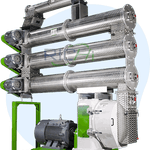
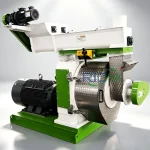
8. Select the Right Cat Litter Production Equipment
Choosing suitable cat litter production equipment is one of the most important investment decisions.
A typical plant may require:
Raw Material Handling Equipment
- Hopper
- Conveyor
- Storage bin
- Feeder
Pretreatment Equipment
- Cleaner
- Crusher
- Hammer mill
- Dryer
Formulation Equipment
- Batching system
- Mixer
- Liquid spraying system
Forming Equipment
- Pellet mill
- Granulator
- Die and roller system
Post-Processing Equipment
- Cooler
- Vibrating screen
- Coating machine
Environmental Equipment
- Cyclone
- Baghouse filter
- Dust collection system
Packaging Equipment
- Automatic weighing machine
- Bagging machine
- Sealing machine
- Conveyor
Not every factory needs all of these machines. The final configuration depends on the raw material and product.
9. Choose Production Capacity
Production capacity should be based on market demand and investment capability.
A small business may start with a compact production system.
A medium-sized manufacturer may choose a semi-automatic line.
A large manufacturer targeting regional or international markets may require a fully automated production line.
Common capacity considerations include:
- Raw material supply
- Expected sales
- Factory area
- Investment budget
- Labor availability
- Packaging capacity
- Distribution network
It is generally better to build a production system that matches realistic demand rather than investing in excessive capacity from the beginning.
10. Small-Scale Cat Litter Production
A small production business can use a relatively simple configuration.
For some plant-based products, the process may include:
Grinding → Mixing → Pelletizing → Drying → Cooling → Screening → Packaging
If the raw material is already dry and fine, fewer pretreatment machines may be needed.
Semi-automatic packaging can also reduce initial investment.
Small-scale production can be useful for:
- Market testing
- Local brands
- Regional distribution
- Small pet-product businesses
- Raw-material suppliers
Once demand increases, the production system can be expanded.
11. Medium- and Large-Scale Production
A larger factory can automate most production stages.
The system may include:
- Automatic raw material receiving
- Storage
- Cleaning
- Crushing
- Grinding
- Drying
- Automatic batching
- Mixing
- Pelletizing
- Cooling
- Screening
- Odor treatment
- Packaging
- Palletizing
- PLC control
Automation can improve:
- Production efficiency
- Formula accuracy
- Product consistency
- Labor efficiency
- Material handling
- Factory management
12. Build a Suitable Factory Layout
Factory layout is another important consideration.
A logical material flow should be established.
For example:
Raw Material Area → Pretreatment → Grinding → Mixing → Pelletizing → Drying → Cooling → Screening → Packaging → Finished Product Warehouse
The layout should minimize unnecessary material movement.
It should also provide sufficient space for:
- Equipment
- Maintenance
- Raw materials
- Finished products
- Packaging materials
- Worker access
- Dust collection systems
A well-planned layout can improve operational efficiency.
https://pelletisingmachine.com/cat-litter-production-line
13. Consider Utilities and Infrastructure
A cat litter factory requires appropriate infrastructure.
Depending on the process, the factory may need:
- Electricity
- Water
- Heating fuel
- Ventilation
- Compressed air
- Dust collection
- Drainage
- Warehouse space
Drying equipment can be a major energy consumer.
Therefore, the available energy source should be considered when designing the production system.
14. Install Dust Collection Equipment
Dust management is important for both product quality and factory operations.
Dust may be generated during:
- Crushing
- Grinding
- Drying
- Screening
- Conveying
- Packaging
A professional dust collection system can include:
- Cyclones
- Bag filters
- Ducting
- Local exhaust points
Dust collection can reduce airborne particles and improve the working environment.
It can also reduce product losses caused by excessive fines.
15. Establish Quality Control
A cat litter business should have clear quality-control standards.
Important tests include:
Moisture
Ensures storage stability.
Particle Size
Ensures consistent product appearance and performance.
Absorption
Measures liquid absorption.
Clumping
Evaluates clump strength and formation.
Dust
Measures the amount of fine material.
Durability
Determines resistance to breakage.
Odor Control
Evaluates odor-management performance.
Quality standards should be applied consistently to every production batch.
16. Test Absorption Performance
Absorption is one of the most important selling points.
Manufacturers should test:
- Absorption speed
- Total liquid absorption
- Liquid retention
- Wet strength
- Pellet breakdown
If absorption is insufficient, the manufacturer can adjust the formula, particle size, or pellet density.
Different product categories require different absorption characteristics.
17. Improve Odor Control
Odor control is another major factor affecting customer satisfaction.
Depending on the formula, manufacturers may use:
- Activated carbon
- Plant-based odor-control materials
- Suitable mineral adsorbents
- Other functional additives
These materials should be evenly distributed.
Manufacturers can also develop different versions for different markets, such as standard, odor-control, and premium products.
18. Control Dust and Tracking
Low dust and low tracking can help differentiate a product.
Dust can be reduced by:
- Optimizing grinding
- Improving pellet durability
- Screening out fines
- Improving conveying
- Installing dust collectors
- Optimizing packaging
Tracking can be influenced by:
- Particle size
- Pellet shape
- Density
- Surface characteristics
Product testing is needed to determine the most appropriate combination.
19. Choose the Right Packaging
Packaging plays an important role in marketing.
Common sizes include:
- 5 kg
- 6 kg
- 10 kg
- 15 kg
A business may offer several package sizes for:
- Individual consumers
- Online sales
- Pet stores
- Wholesale distributors
The packaging should protect the litter from moisture and damage.
It should also clearly communicate product benefits and usage instructions.
20. Develop Your Brand
A production business needs more than manufacturing capability.
Brand development can include:
- Brand name
- Logo
- Packaging design
- Product positioning
- Product specifications
- Marketing materials
For example, a plant-based cat litter brand may emphasize:
- Plant-based materials
- Low dust
- High absorption
- Odor control
- Easy cleaning
- Lightweight handling
The claims should be supported by actual product testing.
21. Calculate the Initial Investment
Starting a cat litter production business requires several categories of investment.
Equipment
This may include grinders, dryers, pellet mills, coolers, screens, packaging machines, and dust collectors.
Factory
Costs may include:
- Land or building
- Construction
- Flooring
- Electrical installation
- Warehouse
Utilities
Electricity, heating, water, and ventilation systems may require additional investment.
Packaging
Bags, labels, cartons, and pallets need to be included in the budget.
Working Capital
The business needs cash flow for:
- Raw materials
- Labor
- Electricity
- Packaging
- Transportation
- Marketing
A complete financial model should include both initial investment and operating costs.
22. Estimate Production Costs
Production cost typically includes:
Raw Material + Energy + Labor + Packaging + Maintenance + Transportation + Other Operating Costs
Raw material cost can vary significantly depending on the product.
For a plant-based business, locally available agricultural or wood-processing residues can potentially reduce material costs.
However, transportation, drying, and preprocessing must also be considered.
The lowest raw-material price does not always produce the lowest total production cost.
23. Consider Energy Consumption
Drying is often one of the most energy-intensive stages of plant-based cat litter production.
Energy consumption depends on:
- Initial moisture
- Final moisture
- Material throughput
- Dryer efficiency
- Heat source
Manufacturers can reduce energy consumption by:
- Sourcing materials with lower moisture
- Improving dryer efficiency
- Recovering waste heat where appropriate
- Avoiding unnecessary drying
- Matching dryer capacity to production
Energy efficiency can have a major impact on long-term profitability.
24. Choose a Reliable Equipment Supplier
The supplier should be evaluated based on more than equipment price.
Important considerations include:
- Equipment quality
- Production experience
- Engineering capability
- Customization
- Installation service
- Commissioning
- Operator training
- Spare parts
- Technical support
- After-sales service
A supplier with experience in complete production lines can help ensure that individual machines work together properly.
25. Why Turnkey Engineering Can Be Valuable
Building a cat litter factory involves many interconnected systems.
A turnkey supplier can help coordinate:
- Production process design
- Equipment selection
- Factory layout
- Equipment manufacturing
- Transportation
- Installation
- Commissioning
- Operator training
- After-sales support
This reduces the risk of purchasing incompatible machines from different suppliers.
It also provides a single technical partner for the project.
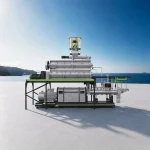
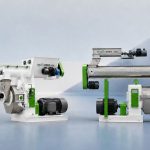
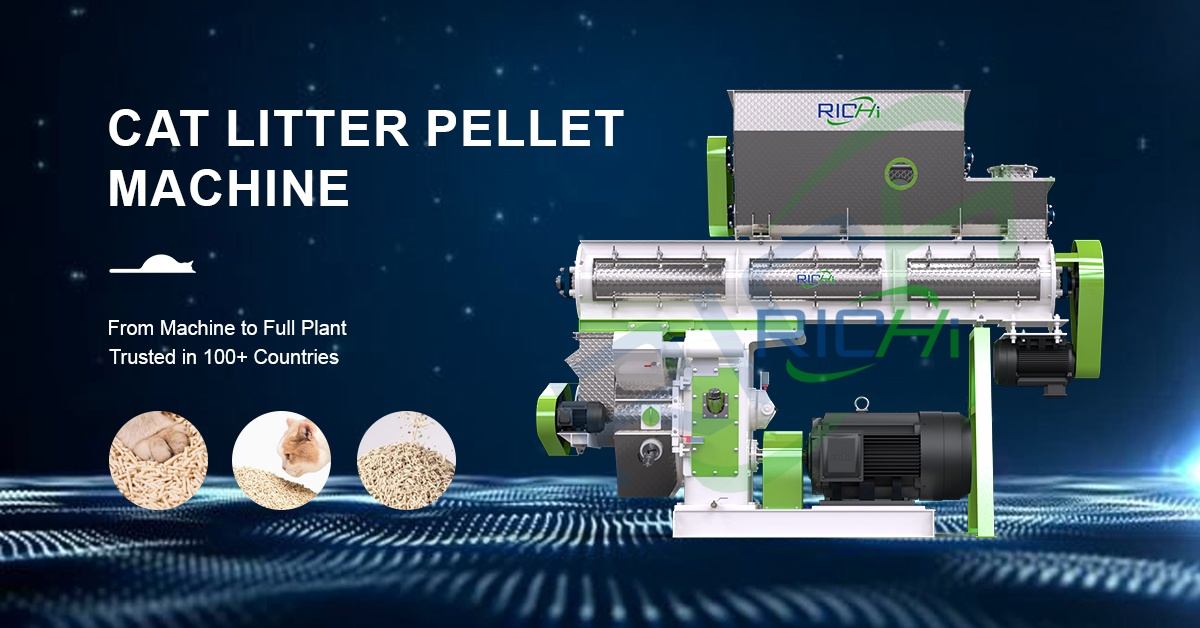
26. RICHI Cat Litter Production Equipment and Turnkey Solutions
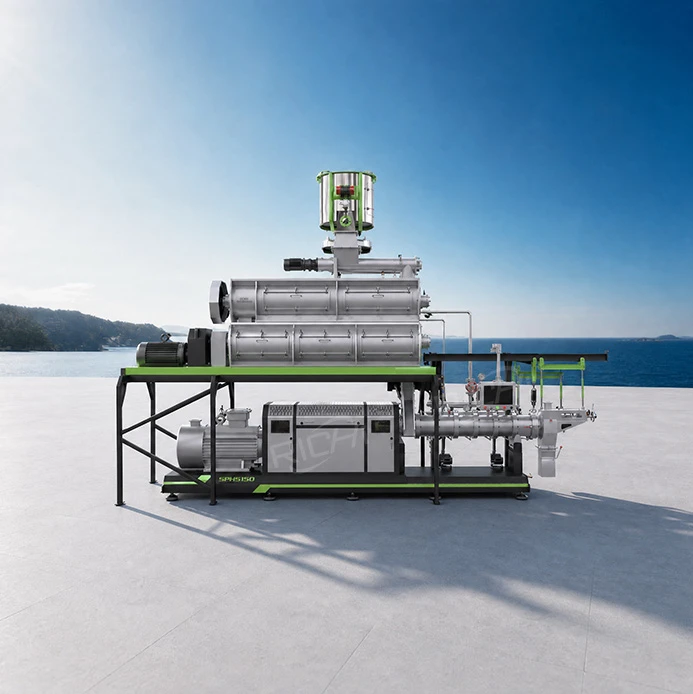
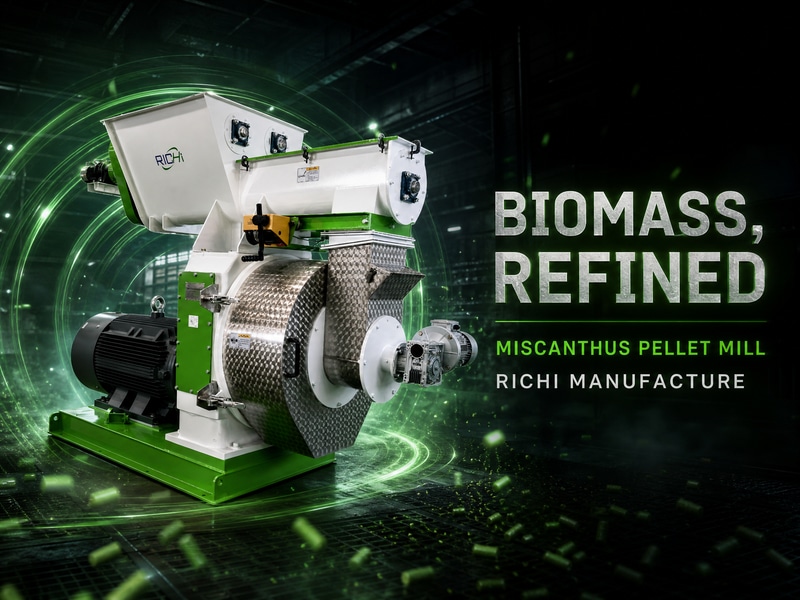
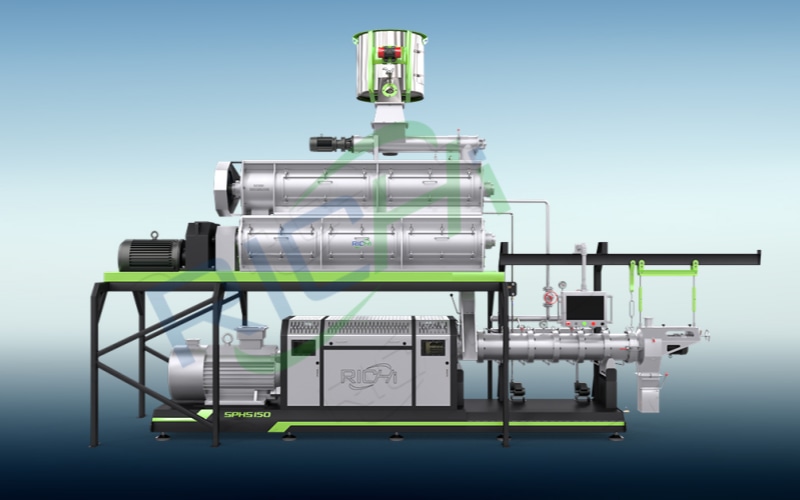
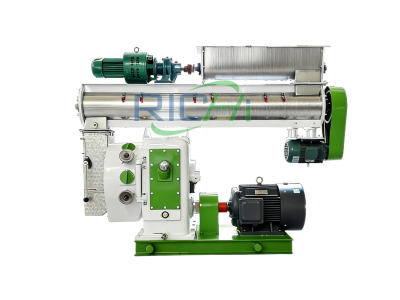
RICHI Machinery provides customized cat litter production equipment and complete production line solutions for different types of cat litter.
Depending on the raw material and product requirements, the equipment configuration may include:
Raw Material Cleaning → Crushing → Grinding → Drying → Batching → Mixing → Pelletizing/Granulation → Drying → Cooling → Screening → Coating → Packaging
The system can be customized according to:
- Raw material type
- Moisture content
- Production capacity
- Pellet diameter
- Product density
- Formula
- Packaging specifications
- Factory layout
- Automation requirements
RICHI can also provide turnkey project services covering customized production line design, equipment manufacturing, overseas transportation and customs clearance, on-site installation and commissioning, operator training, spare parts supply, and long-term technical support.
This integrated approach allows customers to establish a complete cat litter production business around their specific raw materials and target market.
27. Develop Multiple Product Grades
Once production is stable, manufacturers can consider developing multiple product lines.
For example:
Economy Product
Focuses on competitive pricing.
Standard Product
Balances absorption, odor control, and price.
Premium Product
May emphasize:
- Low dust
- High absorption
- Strong clumping
- Better odor control
- Premium packaging
Multiple product grades can help businesses reach different customer segments.
28. Build a Distribution Network
A good manufacturing system needs a strong sales channel.
Potential channels include:
- Pet stores
- Supermarkets
- Online marketplaces
- E-commerce websites
- Veterinary businesses
- Pet wholesalers
- Regional distributors
- Export markets
Online sales can be especially useful for new brands because they allow businesses to reach customers without immediately establishing a large physical distribution network.
29. Create a Marketing Strategy
Marketing should focus on measurable product benefits.
Potential selling points include:
- Strong absorption
- Fast clumping
- Low dust
- Low tracking
- Odor control
- Plant-based materials
- Lightweight
- Easy cleaning
Content marketing can include:
- Product demonstrations
- Absorption tests
- Clumping tests
- Manufacturing stories
- Raw-material information
- Usage guides
Transparent demonstrations can help build customer trust.
30. Start With Market Testing
A new business does not necessarily need to begin with maximum production capacity.
A practical approach is:
Market Research → Raw Material Testing → Pilot Production → Product Testing → Small-Scale Sales → Market Feedback → Capacity Expansion
Customer feedback can reveal whether improvements are needed in:
- Pellet size
- Absorption
- Odor control
- Dust
- Packaging
- Price
This reduces the risk of investing heavily in a product before understanding the market.
31. Common Mistakes to Avoid
New manufacturers should avoid several common mistakes.
Choosing Equipment Based Only on Price
Cheap equipment may create higher maintenance and operating costs.
Ignoring Raw Material Testing
Different raw materials behave differently.
Oversizing the Factory
Excess capacity can increase unnecessary investment.
Underestimating Drying Costs
Drying can significantly affect production economics.
Ignoring Dust Control
Dust affects both product quality and factory operations.
Poor Packaging
Good litter can lose market appeal if packaging is weak or inconvenient.
Failing to Test the Product
Actual performance should be verified before large-scale sales.
32. How to Make the Business More Profitable
Profitability depends on the relationship between production cost, selling price, and sales volume.
Manufacturers can improve profitability by:
- Using locally available raw materials
- Reducing energy consumption
- Improving production efficiency
- Reducing material losses
- Automating packaging
- Developing premium products
- Building a strong brand
- Expanding distribution
- Increasing capacity when demand is proven
The goal is not simply to produce more litter, but to produce a product customers are willing to buy repeatedly.
33. A Step-by-Step Business Startup Plan
A practical startup roadmap can be organized as follows:
Step 1: Research the Market
Identify target customers and competitors.
Step 2: Select the Product
Choose bentonite, tofu, wood, corn, or another type.
Step 3: Analyze Raw Materials
Test local materials for quality and availability.
Step 4: Develop the Formula
Optimize absorption, strength, odor control, and cost.
Step 5: Conduct Pilot Tests
Produce sample batches and evaluate performance.
Step 6: Determine Capacity
Choose production capacity based on realistic demand.
Step 7: Design the Production Line
Select suitable machinery and factory layout.
Step 8: Purchase Equipment
Work with a reliable equipment supplier.
Step 9: Install and Commission
Complete installation, testing, and production trials.
Step 10: Train Operators
Ensure workers understand operation and maintenance.
Step 11: Launch the Product
Begin with selected sales channels.
Step 12: Optimize and Expand
Use market feedback to improve products and increase capacity.
34. Future Opportunities in Cat Litter Manufacturing
The cat litter market provides opportunities for product innovation.
Manufacturers can explore:
- Plant-based litter
- Biodegradable materials
- Low-dust products
- Lightweight litter
- High-absorption formulas
- Advanced odor-control systems
- Multi-function litter
- Premium natural products
Agricultural and forestry by-products can also provide opportunities to create new products while improving resource utilization.
Conclusion
Starting a cat litter production business requires careful planning across market research, raw material selection, product formulation, equipment investment, factory design, quality control, packaging, branding, and distribution.
The basic business process can be summarized as:
Market Research → Raw Material Selection → Formula Development → Pilot Production → Equipment Selection → Factory Construction → Installation → Production → Packaging → Marketing → Sales → Expansion
Choosing the right cat litter production equipment is particularly important. Depending on the product, a production system may include cleaning machines, crushers, grinders, dryers, mixers, pellet mills or granulators, coolers, screens, coating systems, dust collectors, and packaging machines.
A small business can begin with a compact or semi-automatic system, while larger manufacturers can invest in automated production lines with centralized control. The right choice depends on raw material availability, market demand, investment budget, and long-term growth plans.
For manufacturers seeking a complete solution, RICHI can customize cat litter production equipment and turnkey production lines according to raw materials, capacity, product specifications, and factory layout. Services can extend from production line design and equipment manufacturing to transportation, installation, commissioning, operator training, and long-term technical support.
Ultimately, a successful cat litter business is built on more than machinery. Reliable raw materials, a competitive formula, efficient production, consistent quality, attractive packaging, effective marketing, and a strong distribution network all contribute to long-term success. By carefully planning each stage and starting with a product that meets real market needs, entrepreneurs can build a scalable cat litter manufacturing business and gradually expand into larger regional or international markets.