

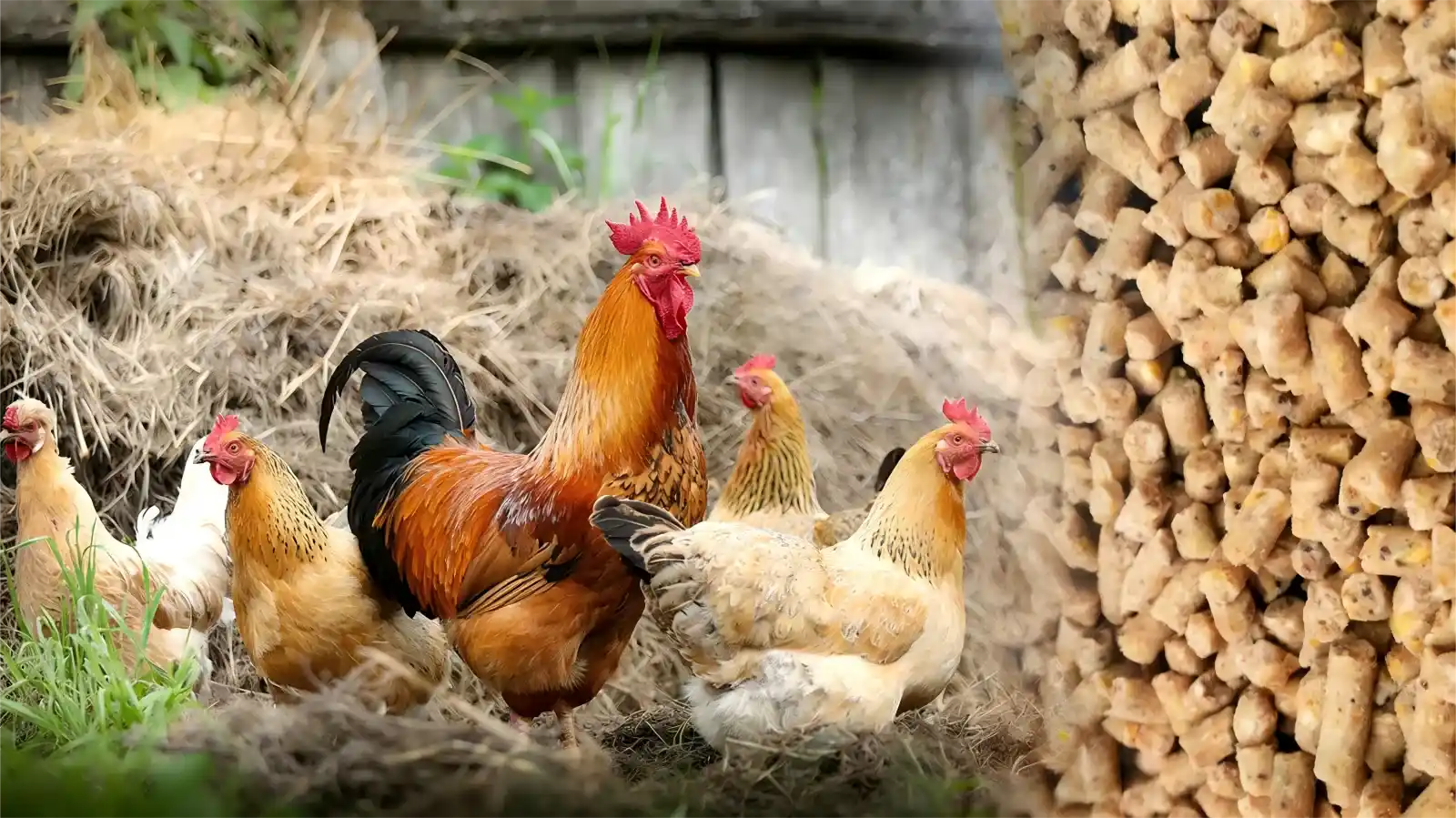
Chicken feed pellet production has become increasingly sophisticated as poultry farms and feed manufacturers demand more consistent feed quality, higher production efficiency, and better control over operating costs. Traditional manual or semi-automatic production methods may work for small-scale operations, but they can become difficult to manage when production volume increases and feed formulas become more complex.
Automation provides a practical way to improve the stability, accuracy, and efficiency of a modern chicken feed production line. From raw material handling and automatic batching to grinding, mixing, conditioning, pelletizing, cooling, screening, and packaging, automated systems can coordinate different stages of production while reducing unnecessary manual intervention.
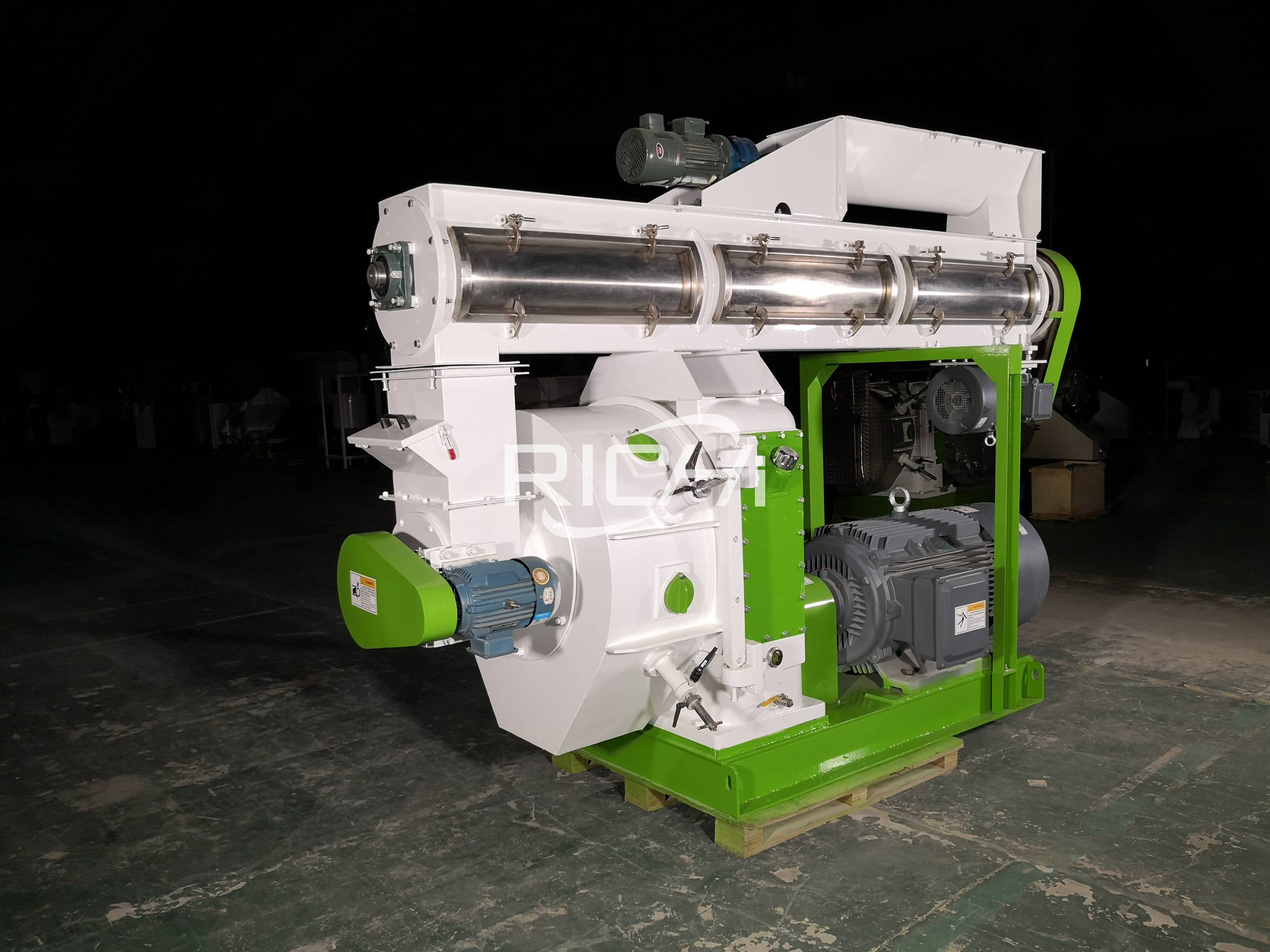
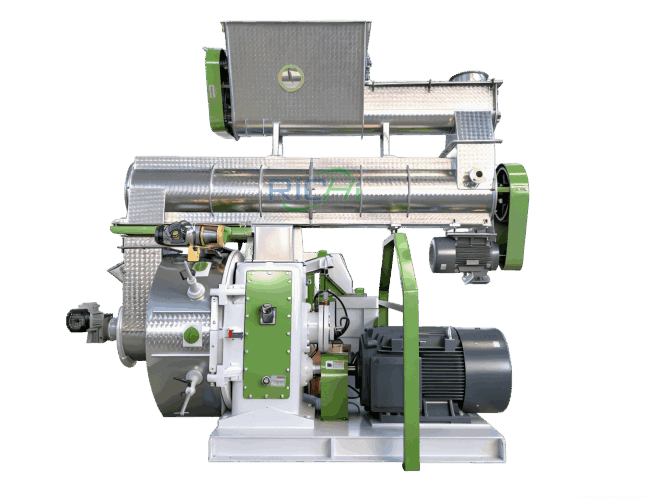
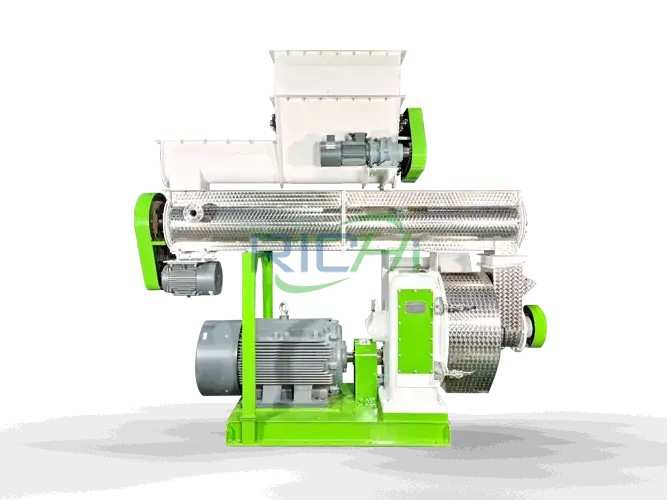
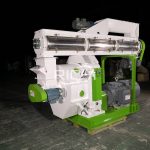
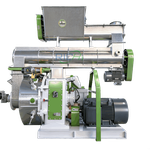
A modern chicken feed pelleting machine can also be integrated into an automated production system to maintain stable pelletizing conditions. When the pellet mill works together with automated feeding, conditioning, monitoring, and control systems, manufacturers can achieve more consistent output and reduce fluctuations caused by human operation.
This article explains why automation matters in chicken feed pellet production and how it can improve feed quality, production efficiency, labor management, energy utilization, and overall plant operation.
What Is Automation in Chicken Feed Pellet Production?
Automation in chicken feed production refers to the use of control systems, sensors, motors, variable-frequency drives, automatic batching equipment, programmable controllers, and other technologies to coordinate production processes.
Instead of requiring operators to manually control every machine, an automated system allows production parameters to be preset and monitored through a centralized control system.
Depending on the scale and requirements of the feed mill, automation may cover:
- Raw material receiving and conveying
- Raw material cleaning
- Grinding
- Automatic batching
- Mixing
- Steam conditioning
- Pelletizing
- Cooling
- Screening
- Crumbling
- Liquid or oil addition
- Finished feed conveying
- Packaging
- Production monitoring
- Equipment protection and alarms
The level of automation can be customized according to production capacity, feed formulas, labor availability, and investment budget.
A small poultry feed plant may use automation mainly for batching and pelletizing, while a large commercial feed factory may automate almost the entire production process.
Why Is Automation Important for Chicken Feed Production?
Chicken feed formulas often contain multiple ingredients, including corn, wheat, soybean meal, rice bran, wheat bran, fish meal, minerals, vitamins, oil, and other additives.
The proportions of these ingredients can directly affect nutrient balance and pellet quality. At the same time, poultry feed production requires stable processing conditions.
Automation helps control these variables more precisely.
The main benefits include:
- More accurate ingredient dosing
- More consistent mixing
- Stable pelletizing conditions
- Better production efficiency
- Reduced labor requirements
- Lower risk of operating errors
- Improved energy management
- Better production monitoring
- More reliable equipment protection
- Easier production management
These advantages become increasingly important as feed production capacity increases.
Automatic Batching Improves Formula Accuracy
One of the most important applications of automation is automatic batching.
Chicken feed formulas may contain several major ingredients and a number of minor ingredients. Manually weighing each ingredient can introduce errors, particularly when the production scale becomes large.
For example, a chicken feed formula may contain 55% corn, 20% soybean meal, 10% wheat bran, 8% rice bran, and smaller quantities of minerals, vitamins, and other additives.
If each ingredient is manually weighed, the actual proportion may vary from batch to batch.
An automatic batching system uses weighing equipment and programmed formulas to control ingredient quantities.
The system can:
- Store multiple feed formulas
- Automatically weigh ingredients
- Control feeding sequences
- Record batching data
- Reduce weighing errors
- Improve batch-to-batch consistency
This is particularly valuable for commercial feed manufacturers producing different types of chicken feed.
Automation Makes Feed Formulation More Flexible
Chicken feed manufacturers may produce different products for different growth stages.
For example, a poultry feed factory may manufacture:
- Chick starter feed
- Broiler starter feed
- Broiler grower feed
- Broiler finisher feed
- Layer feed
- Breeder feed
Each product may require a different formula.
With an automated control system, operators can select the required formula from the control interface rather than manually adjusting every ingredient.
The system can then coordinate the appropriate batching sequence.
This makes it easier to switch between formulas while reducing the possibility of using incorrect ingredient quantities.
For commercial feed manufacturers, formula management is an important part of production efficiency.
Automated Grinding Supports Consistent Particle Size
Grinding is another important stage that can benefit from automation.
Corn, wheat, soybean meal, and other ingredients may have different physical characteristics. Before pelletizing, many raw materials need to be ground to an appropriate particle size.
Particle size influences:
- Mixing uniformity
- Pellet quality
- Pellet durability
- Conditioning performance
- Energy consumption
- Feed digestibility
An automated grinding system can coordinate the hammer mill or other grinding equipment with conveyors, feeders, screens, and dust collection systems.
If the grinding system detects abnormal operating conditions, alarms or protective mechanisms can help prevent equipment damage.
Automation can therefore improve both production stability and equipment safety.
Automated Mixing Improves Feed Uniformity
After batching and grinding, ingredients need to be mixed thoroughly.
Poor mixing can lead to uneven nutrient distribution. Some particles may contain excessive amounts of minerals or additives while other particles may contain insufficient quantities.
Automatic mixing systems can control:
- Feeding sequence
- Mixer loading
- Mixing time
- Discharge
- Ingredient addition
- Liquid addition
The goal is to achieve a more uniform feed mixture before pelletizing.
For chicken feed, uniformity is particularly important because poultry consume relatively small quantities of feed compared with larger livestock. Consistent nutrient distribution helps ensure that the formulated diet is represented more evenly throughout the finished feed.
Automation Improves Steam Conditioning
Steam conditioning is one of the most important stages before pelletizing.
During conditioning, steam adds heat and moisture to the feed mixture. Proper conditioning can improve the physical properties of the feed and help the pellet mill produce stronger pellets.
However, conditioning must be controlled carefully.
Too little moisture or heat may result in poor pellet formation. Excessive moisture can create other processing problems.
An automated conditioning system can monitor and adjust factors such as:
- Steam supply
- Feed flow
- Temperature
- Moisture
- Conditioning time
This creates more stable conditions before the material enters the pellet mill.
For a high-capacity chicken feed plant, automated conditioning can make a significant difference in production stability.
How Automation Improves a Chicken Feed Pelleting Machine
The pellet mill is one of the core machines in a chicken feed production line.
A modern chicken feed pelleting machine must handle continuous material flow while maintaining suitable pelletizing pressure, temperature, and feed rate.
Automation can help coordinate several operating parameters.
For example, a variable-frequency drive can regulate the feeding speed according to the actual operating condition of the pellet mill.
If the pellet mill is overloaded, the automatic control system can reduce the feed rate.
If the load is stable and additional capacity is available, the system can increase the feed rate within the designed operating range.
This helps reduce sudden overloads and improves continuous operation.
(Learn more:https://richipelletizer.com/chicken-feed-pellet-machine-for-sale/)
Automatic Load Control Reduces Pellet Mill Overloading
Pellet mills operate under significant mechanical load.
If too much material enters the pellet mill at once, the motor load can rise sharply. This can reduce production stability and potentially cause equipment protection systems to activate.
An automated feeding system can respond to changes in motor load.
The basic principle is:
Stable load → stable feeding → stable pelletizing → stable output
Automatic load control is especially useful when raw materials have different moisture levels, fiber contents, or physical characteristics.
It helps the pellet mill respond to changes more smoothly than manual feeding.
Automation Helps Maintain Consistent Pellet Size
Chicken feed pellets are commonly produced in different diameters depending on the age and feeding requirements of the birds.
Young chicks may require smaller particles, while older broilers may use larger pellets.
Pellet size depends largely on die-hole diameter and other pelletizing conditions.
Automation does not replace proper die selection, but it can help maintain stable production conditions once the correct die is installed.
Stable feed rate, conditioning, and pellet mill operation can contribute to more consistent pellet dimensions.
Automated Cooling Protects Pellet Quality
Fresh pellets leaving the pellet mill are hot and contain relatively high moisture.
They must be cooled before screening, storage, or packaging.
A counterflow cooler or other cooling equipment can reduce pellet temperature and moisture.
Automation can control:
- Cooling air volume
- Material level
- Discharge
- Cooling time
- Fan operation
Stable cooling is important because insufficient cooling may leave pellets too warm or moist for safe storage.
An automated cooling system can help reduce these variations.
Automatic Screening Reduces Fines
After cooling, pellets are normally screened.
The purpose of screening is to separate qualified pellets from fines and unwanted particles.
In some applications, fines can be returned to the pelletizing system for reprocessing.
An automated screening and conveying system can coordinate the movement of qualified pellets and recycled fines.
This creates a more continuous production process and reduces manual material handling.
For poultry feed manufacturers, reducing unnecessary fines can also improve the appearance and handling characteristics of the finished product.
Automation Makes Crumbling More Efficient
Not all chicken feed is produced as whole pellets.
Young chicks may require crumbled feed because smaller birds have difficulty consuming larger pellets.
A typical process may therefore include:
Pelletizing → Cooling → Crumbling → Screening
An automated system can coordinate the crumbler, screen, conveyors, and product routing.
The size of the final particles can be controlled by adjusting the crumbler and screening system.
This allows one production line to manufacture different feed forms for different poultry growth stages.
Automation Improves Liquid Addition
Some chicken feed formulas contain oil, molasses, or other liquid ingredients.
Liquid addition needs to be controlled carefully because excessive liquid can affect material flow and pellet formation.
Automated liquid addition systems can control:
- Pump operation
- Flow rate
- Addition quantity
- Spray distribution
- Timing
This helps improve consistency from batch to batch.
In more advanced feed plants, liquid addition can be connected with the main production control system so that the correct amount is automatically calculated according to the selected formula.
Automation Reduces Labor Requirements
A major reason feed manufacturers invest in automation is labor efficiency.
In a manually operated plant, workers may need to:
- Monitor material feeding
- Weigh ingredients
- Operate machines individually
- Adjust feed rates
- Check temperatures
- Monitor motors
- Control conveyors
- Inspect finished products
As production capacity increases, managing all these tasks manually becomes difficult.
Automation allows fewer operators to manage a larger number of machines.
Operators can monitor production from a central control room rather than standing beside every machine.
This does not eliminate the need for skilled personnel. Instead, it changes the role of workers from repetitive manual operation toward production supervision, quality control, maintenance, and process management.
Automation Reduces Human Operating Errors
Human error is one of the potential causes of inconsistent feed production.
Examples include:
- Incorrect ingredient quantity
- Wrong formula selection
- Incorrect feeding sequence
- Excessive feed rate
- Insufficient steam
- Incorrect machine settings
- Failure to respond to overload conditions
Automated systems can reduce many of these risks by following programmed production parameters.
However, automation should not be considered a substitute for proper management. Operators still need to verify formulas, raw material quality, equipment conditions, and finished feed quality.
Automation Improves Production Monitoring
Modern feed mills can collect production data throughout the manufacturing process.
The control system may monitor:
- Motor current
- Production rate
- Temperature
- Material flow
- Steam pressure
- Equipment status
- Batch quantities
- Operating time
- Alarm conditions
This information can help plant managers understand how the production line is operating.
For example, if the pellet mill frequently experiences high motor loads, operators can investigate whether the problem is related to feed rate, raw material moisture, die condition, or conditioning.
Data therefore provides a foundation for process optimization.
Automation Can Improve Energy Management
Energy consumption is an important consideration for pellet production.
Major energy-consuming machines may include:
- Hammer mills
- Pellet mills
- Fans
- Dryers
- Conveyors
- Compressors
- Cooling systems
Automation can help manage energy use by coordinating equipment operation according to production demand.
Variable-frequency drives can adjust motor speed where appropriate instead of operating equipment continuously at full speed.
Automated sequencing can also prevent unnecessary idle operation.
For example, downstream equipment can be started in the appropriate sequence before upstream equipment begins feeding material.
This helps reduce unnecessary machine operation and improves overall plant coordination.
Automation Improves Equipment Protection
A modern automated feed plant can incorporate multiple safety and protection functions.
These may include:
- Motor overload protection
- High-temperature alarms
- Low-material-level alarms
- Conveyor blockage detection
- Emergency stop systems
- Bearing temperature monitoring
- Electrical protection
- Interlocking between machines
For example, if a downstream conveyor stops unexpectedly, the upstream feeding equipment can also stop to prevent material accumulation.
This type of interlocking is particularly important in a continuous production line.
Automation Supports Preventive Maintenance
Automation can also contribute to maintenance management.
Operating data can help identify unusual conditions.
For example, an increase in motor current may indicate changes in material characteristics or equipment condition.
Abnormal temperature may indicate bearing or lubrication problems.
Frequent overload alarms may indicate problems with feeding, conditioning, or pelletizing.
By monitoring these signals, maintenance personnel can investigate problems before they develop into major production interruptions.
Regular inspection and preventive maintenance are still essential, but automation provides additional information for maintenance decisions.
Automation Improves Production Traceability
For commercial feed manufacturers, traceability can be an important part of production management.
Automated systems can record information such as:
- Formula used
- Ingredient quantities
- Batch number
- Production time
- Production quantity
- Operator information
- Equipment alarms
These records can help manufacturers review production history when quality problems occur.
If a particular batch has abnormal pellet durability or moisture, production records can help identify possible causes.
How to Choose the Right Level of Automation
Not every chicken feed plant needs the same level of automation.
A small farm-based feed mill may only require basic automatic batching and pelletizing control.
A medium-sized feed factory may benefit from automated batching, mixing, conditioning, pelletizing, cooling, screening, and packaging.
A large commercial feed factory may require a fully integrated control system covering the entire production process.
When selecting an automation level, manufacturers should consider:
Production Capacity
Higher-capacity plants generally benefit more from automation because manual operation becomes increasingly difficult as throughput increases.
Number of Feed Formulas
If the plant produces many formulas, automatic formula management can provide significant advantages.
Labor Availability
In regions where skilled labor is limited or labor costs are high, automation can improve operational efficiency.
Raw Material Characteristics
Feed formulas containing different raw materials may require more precise process control.
Investment Budget
Automation increases the initial investment, so the system should be designed according to actual production requirements rather than adding unnecessary functions.
Future Expansion
A plant should ideally have enough flexibility to accommodate future increases in capacity or additional feed products.
What Does an Automated Chicken Feed Production Line Include?
A complete automated chicken feed pellet production line may include:
- Raw material receiving system
- Cleaning equipment
- Hammer mill or grinder
- Automatic batching system
- Feed mixer
- Steam conditioning system
- Chicken feed pellet mill
- Pellet cooler
- Pellet crumbler when required
- Vibrating screen
- Finished feed conveying system
- Automatic packing machine
- Dust collection system
- Central control system
Depending on the raw materials, production capacity, and final feed requirements, additional equipment such as dryers, liquid addition systems, elevators, silos, and storage bins may also be included.
Automation Should Be Designed Around the Production Process
Automation should not be treated as simply adding a control cabinet to an existing feed mill.
The automation system should be designed together with the production process.
For example, the designer needs to consider:
- Raw material characteristics
- Feed formula
- Required production capacity
- Pellet diameter
- Moisture conditions
- Grinding requirements
- Steam conditioning requirements
- Cooling capacity
- Packaging requirements
- Factory layout
- Material flow
- Operator workflow
A well-designed system coordinates these factors instead of controlling each machine independently.
Automation and Turnkey Chicken Feed Plant Solutions
For investors planning a new chicken feed factory, automation should be considered during the initial plant design stage.
A turnkey feed production project can integrate:
Raw Material Handling → Cleaning → Grinding → Batching → Mixing → Conditioning → Pelletizing → Cooling → Screening → Crumbling → Packaging
The control system can connect the major equipment and allow operators to monitor the complete production process from a centralized interface.
This approach can simplify operation and make future upgrades easier.
For example, a manufacturer may initially produce 5 tons per hour but later expand production. If the original layout and control architecture have been designed with expansion in mind, additional equipment can be integrated more easily.
(investigate this site:RICHI Pelletizer)
Is Automation Worth the Investment?
The answer depends on the specific production scale and business model.
For very small feed operations, a fully automated system may not always be necessary.
However, as production capacity, formula complexity, labor requirements, and quality-control requirements increase, automation can provide more value.
The potential benefits include:
- More accurate batching
- Consistent production
- Reduced labor requirements
- Better pellet quality
- Improved equipment protection
- Easier production monitoring
- Better energy management
- Reduced operating errors
- More efficient production scheduling
- Easier future expansion
The economic value of automation should therefore be evaluated over the entire operating life of the feed plant rather than only by comparing initial equipment costs.
Final Thoughts
Automation has become an important part of modern chicken feed pellet production because it connects individual processing stages into a coordinated manufacturing system.
From automatic batching and grinding to conditioning, pelletizing, cooling, screening, and packaging, automation can improve process consistency while reducing repetitive manual work.
A properly integrated chicken feed pelleting machine can operate more efficiently when its feeding, conditioning, load monitoring, and downstream equipment are controlled as part of a complete system.
The most effective automation solution is not necessarily the most complicated one. Instead, it should match the production capacity, feed formulas, raw materials, labor conditions, quality requirements, and future development plans of the feed mill.
For investors building a new poultry feed factory or upgrading an existing plant, automation should therefore be considered as part of the overall production-line design. With the right equipment configuration and control strategy, an automated chicken feed pellet production line can provide a more stable, manageable, and scalable foundation for long-term feed manufacturing.