
Watch a bale of alfalfa being handled, and you’ll see it happen. Green dust floats away. Leaves crumble and drop to the ground. By the time that bale reaches the feeder, it’s already lost a portion of its nutritional value—often a significant one. The leaves, which contain most of the protein and vitamins, are fragile. Every time the hay is moved, raked, baled, or fed, more leaves break off and are lost.
Farmers who grow alfalfa have accepted this as a fact of life. It’s just what happens. But consider the math. If a field produces 5 tons of hay per acre, and leaf loss from harvest to feeding averages 20% to 30%, that means 1 to 1.5 tons of the most nutritious part of the crop never makes it to the animal. In a market where high-quality alfalfa can sell for hundreds of dollars per ton, those losses represent real money.
Is there a way to stop this loss? The answer lies in processing. When alfalfa is pelleted, the entire plant is ground and incorporated into a uniform product. Nothing is lost to shattering. Nothing is wasted to selective feeding. The animal consumes the whole plant, and the whole plant’s nutrition goes to work.
Related post:https://pelletizerextruder.com/alfalfa-pellet-machine/
The Anatomy of Alfalfa
To understand why alfalfa is so valuable—and why leaf loss is such a significant issue—it helps to look at the plant itself. Alfalfa is a legume, related to peas and beans. Like other legumes, it has the ability to fix nitrogen from the air through a symbiotic relationship with bacteria in its root nodules. This is why alfalfa can grow without nitrogen fertilizer and actually improves the soil for subsequent crops.
The alfalfa plant has a deep taproot that can reach down 15 feet or more into the soil. This deep root system allows the plant to access water and minerals that are beyond the reach of shallower-rooted plants. It also makes alfalfa drought-tolerant once established.
Above ground, the plant produces multiple stems from a crown at the soil surface. Each stem bears leaves arranged alternately along the stem. The leaves are trifoliate—three leaflets per leaf—and it’s these leaves that are the nutritional powerhouse of the plant. They contain the highest concentration of protein, vitamins, and minerals. The stems, by comparison, are primarily structural material with lower nutritional value.
The leaf-to-stem ratio is a key indicator of forage quality. When the plant is young and growing rapidly, the leaf-to-stem ratio is high. As the plant matures and begins to flower, the stems become more lignified and the leaf-to-stem ratio declines. This is why the timing of the first cutting is so important—harvest too late, and the quality declines.
What’s Actually in Alfalfa?
The nutritional value of alfalfa comes from its composition. A good-quality alfalfa hay, harvested at the proper stage of maturity, contains roughly these components on a dry matter basis:
Crude protein: 18% to 22%. This protein is highly digestible and provides essential amino acids for milk production, growth, and maintenance. The protein content is one of the main reasons alfalfa is valued for dairy rations.
Neutral detergent fiber (NDF): 35% to 45%. This represents the plant cell walls and is a measure of the fiber content. Fiber is essential for rumen function in cattle and for digestive health in horses.
Acid detergent fiber (ADF): 25% to 35%. This is a subset of the NDF and represents the less digestible fiber components. Lower ADF generally means higher digestibility.
Calcium: 1.2% to 1.5%. This high calcium content makes alfalfa valuable for dairy cows, which have high calcium requirements. It also supports bone development in growing animals.
Potassium: 1.5% to 3.0%. Potassium is important for several metabolic functions and is often deficient in grass-based diets.
Alfalfa also contains a range of other minerals and vitamins, including magnesium, sulfur, zinc, copper, beta-carotene, and vitamin E. This broad nutrient profile is one reason alfalfa is considered a complete feed for many classes of livestock.
The Fragility of the Leaf
The leaf of the alfalfa plant is thin and delicate. The dried leaf, in particular, is brittle and easily broken. When the plant is still growing, the leaves are flexible and resilient. But once the plant is cut and dried for hay, the leaves become increasingly fragile.
The mechanical actions of haymaking—raking, baling, and moving—all contribute to leaf loss. As the hay is turned and manipulated, the leaves break off. The force of the baler can cause significant shattering. Even the process of loading and stacking bales can result in leaf loss.
The result is that the hay delivered to the feeder may have a leaf-to-stem ratio that’s much lower than what was in the field. The lost leaves represent lost protein, lost vitamins, and lost mineral content. The hay that remains is higher in fiber and lower in digestibility.
This loss is not just a matter of weight. The leaves that are lost are the most valuable part of the crop. The stems that remain have value as fiber, but they don’t provide the protein and other nutrients that make alfalfa so valuable.
The Pelleting Advantage
Pelleted alfalfa addresses the leaf loss problem directly. The hay is ground, leaves and stems together. The grinding step breaks down the stems and reduces the leaves to particles that are incorporated into the final product. There is no selective loss of leaves because the entire plant is processed together.
In a pelleted product, the nutritional profile of the finished feed reflects the nutritional profile of the original crop, not just the stems. The protein content of the pellets is higher than that of the hay that might have been made from the same crop, because the leaves are retained.
The heat and pressure of the pelleting process also have effects on the feed. The heat can gelatinize starches, making them more digestible. It can also improve the availability of some nutrients. The pressure creates a dense, uniform product that’s stable in storage.
How Pellets Are Made
The production of alfalfa pellets involves a series of steps, each designed to preserve quality and achieve consistent results.
The first step is grinding. The baled hay is fed into a grinder that reduces it to a uniform particle size. The typical particle size for alfalfa pellets is 2 to 5 millimeters. The grinding step is important because it ensures consistent flow through the pellet machine and uniform pellet quality.
The ground material is then conditioned. Steam is added to soften the fibers and activate the natural binders in the plant. The lignin that’s naturally present in the plant cell walls acts as a binder when heated. Proper conditioning is essential for pellet durability.
The conditioned material is fed into the pellet machine, where it’s forced through a die. The die holes determine the pellet diameter. For alfalfa, pellet diameters typically range from 4 to 8 millimeters. The material emerges from the die as a continuous extruded rod, which is cut to length by knives.
The hot pellets are cooled to ambient temperature. This cooling step hardens the pellets and reduces their moisture content. The final moisture content is typically 10% to 12%, which is stable for storage.
Equipment and Scale
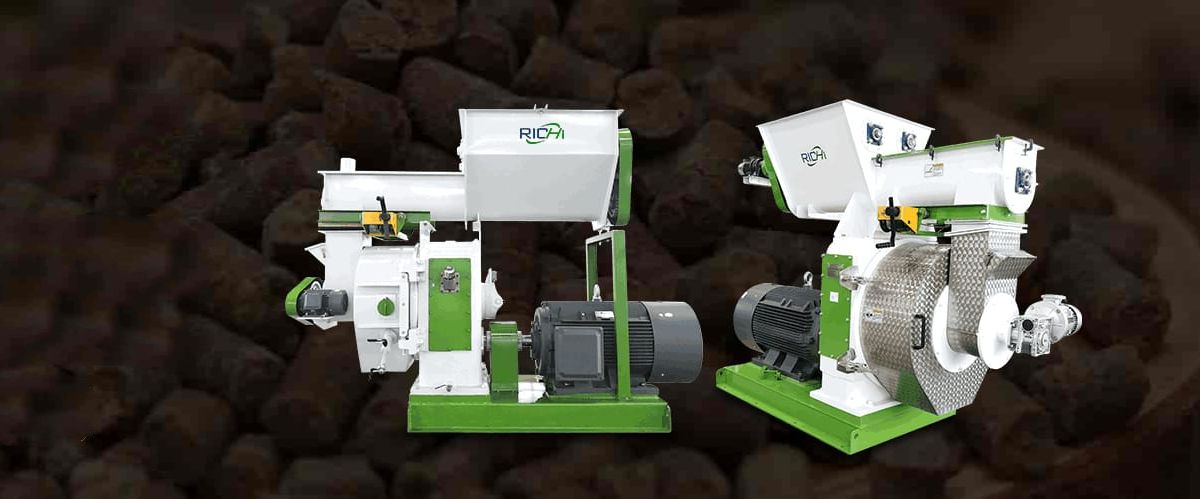
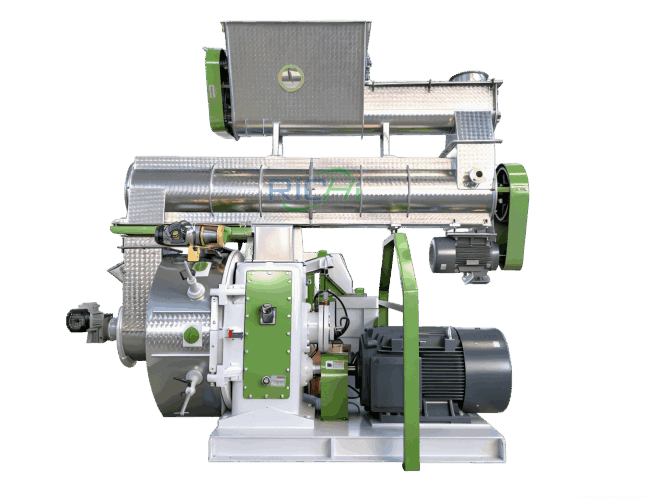
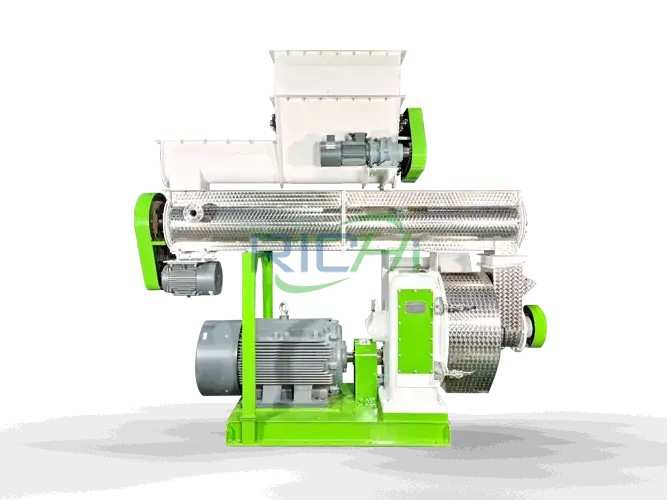
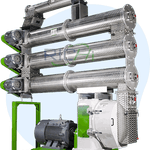
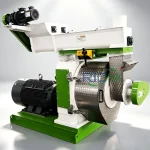
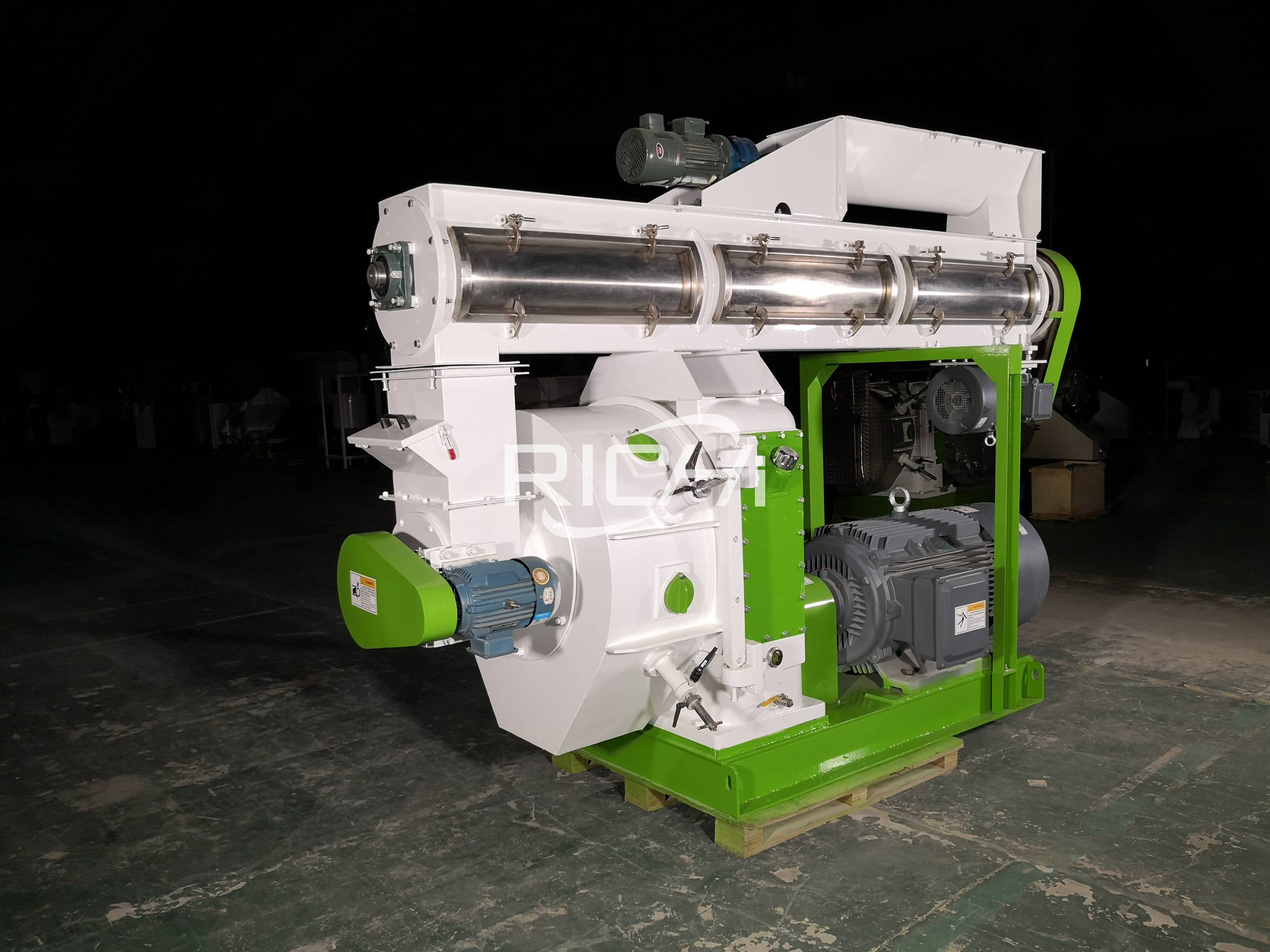
The equipment used to pellet alfalfa ranges from small units suitable for on-farm use to large industrial systems. The machine that performs the actual pelleting is the alfalfa pellet machine for sale on the market from various manufacturers. These machines are specialized for the demands of forage processing, with robust construction and wear-resistant components.
The scale of operation depends on the equipment and the production goals. A small unit might process 500 kilograms per hour, suitable for a farm producing its own feed. A larger system can process several tons per hour, appropriate for a commercial feed mill.
A 5 T/H alfalfa pellet production line represents a significant investment. At this scale, the line includes integrated equipment for grinding, conditioning, pelleting, cooling, and screening. The control systems allow the operator to manage the process from a central location, and the capacity supports commercial production.
The line also includes material handling equipment—conveyors, elevators, and bins—that move the product through the various stages. The design of the line must ensure a smooth flow of material without bottlenecks, minimizing labor requirements and maximizing efficiency.
Quality Considerations
The quality of alfalfa pellets depends on several factors, starting with the raw material. Good-quality hay makes good-quality pellets. The pelleting process cannot improve the nutritional quality of the raw material; it can only preserve what’s already there.
Particle size is another important factor. If the material is ground too fine, the pellets may be overly dense and less palatable. If it’s ground too coarse, the pellets may be weak and crumbly. The right particle size balances density with durability.
Conditioning affects pellet durability. Proper steam conditioning softens the fibers and activates the binders, resulting in pellets that hold together during handling and transport. Under-conditioned material produces weak pellets; over-conditioned material can be sticky and difficult to process.
The die selection affects pellet quality. For alfalfa, the die must be matched to the specific requirements of the crop. The compression ratio—the relationship between the die hole diameter and the die thickness—determines the density and durability of the pellets.
The Result
A pellet plant designed for alfalfa processes the raw hay into a finished product that preserves the nutritional value of the crop. The pellets are uniform in size, consistent in quality, and stable in storage. The animal consumes the whole plant, including the leaves that would otherwise be lost.
For livestock producers, alfalfa pellets offer a reliable source of consistent nutrition. For feed manufacturers, they provide a premium ingredient that commands market prices. And for growers, pelting represents a way to capture more value from each acre of alfalfa.
The technology is proven, the markets are established, and the benefits are clear. Alfalfa pellets represent the next step in getting the most from one of agriculture’s most valuable crops.