
Dog food and cat food are often produced on the same extrusion line. The equipment is similar, the packaging looks alike, and many producers assume the two products can be handled with the same settings. In practice, the formulas behave differently inside the extruder, and the differences affect everything from screw configuration to drying and coating.
Understanding these differences is not just a technical detail. It affects product quality, production efficiency, and whether a new pet food business can serve both markets without constant troubleshooting. Producers who treat dog and cat food as interchangeable often end up with inconsistent kibble, high fines, or products that pets refuse to eat.
The Nutritional Gap Between Dogs and Cats
The starting point is nutrition. Dogs are omnivores with a flexible metabolism. They can digest carbohydrates efficiently and use a wide range of protein sources. Cats are obligate carnivores. They require higher protein levels, specific amino acids such as taurine, and nutrients like arachidonic acid that are found mainly in animal tissues. Cats also have a limited ability to digest carbohydrates compared to dogs.
These nutritional differences shape the formula, and the formula shapes the extrusion process. A cat food formula typically contains more animal protein and fat, less starch, and a different fiber profile. A dog food formula may contain more grain, more plant protein, and a wider range of carbohydrate sources.
For extrusion, these differences matter because starch gelatinization drives expansion. Cat food formulas with lower starch content expand less and may require different screw configurations, moisture levels, and die designs. Dog food formulas with higher starch expand more easily but may become too porous if the process is not controlled.
How Starch Drives Expansion
Extrusion works by cooking the ingredients under heat, moisture, and pressure, then forcing them through a die. When the product exits the die, the sudden drop in pressure causes water inside the matrix to flash into steam. This expansion creates the porous, lightweight texture of kibble.
Starch is the main driver of this expansion. Under the right conditions, starch gelatinizes and forms a continuous matrix that traps water and steam. The more starch in the formula, the more expansion potential. But expansion is not always desirable. Too much expansion produces a light, brittle kibble that breaks easily and generates fines. Too little expansion produces a dense, hard kibble that may be difficult for some pets to chew.
Cat food formulas, with lower starch content, tend to expand less. Producers often compensate by adjusting moisture, temperature, and screw speed. In some cases, they add starch or binders to improve texture. In others, they accept a denser kibble because it suits the product positioning.
Dog food formulas, with higher starch content, expand more readily. The challenge is controlling expansion so the kibble is consistent and durable. This requires careful balancing of moisture, temperature, and die design.
Fat Content and Its Effects
Fat is another major difference. Cat food formulas often contain more fat than dog food formulas. Fat improves palatability and provides concentrated energy, but it also affects extrusion.
High fat content reduces friction inside the extruder barrel. Less friction means less mechanical energy, which can lower cooking temperature and reduce starch gelatinization. The result can be a softer, less expanded kibble. To compensate, producers may increase steam injection, adjust screw speed, or add fat after extrusion through a coating system.
Adding fat after extrusion is common in both dog and cat food production. Vacuum coating allows the fat to penetrate the kibble rather than sitting on the surface. This improves palatability, reduces mess, and helps preserve the kibble structure. But coating requires additional equipment and careful control.
Protein Sources and Their Behavior
Protein sources also behave differently in the extruder. Animal proteins such as poultry meal, fishmeal, and meat and bone meal have different binding properties than plant proteins like soybean meal, wheat gluten, or corn gluten meal.
Animal proteins tend to form cohesive structures that hold together well during extrusion. Plant proteins vary more widely. Some, like wheat gluten, are excellent binders. Others, like soybean meal, may require additional starch or binders to achieve the desired texture.
Cat food formulas, with higher animal protein content, often extrude more smoothly than dog food formulas with high plant protein content. But the higher fat content in cat food can offset this advantage by reducing friction. The interaction between protein, fat, and starch is complex, and the optimal settings depend on the specific formula.
Equipment Configuration for Both Products
A pet food extruder designed to handle both dog and cat food must be flexible. The screw configuration, die design, and process controls should allow adjustment for different formulas without major downtime.
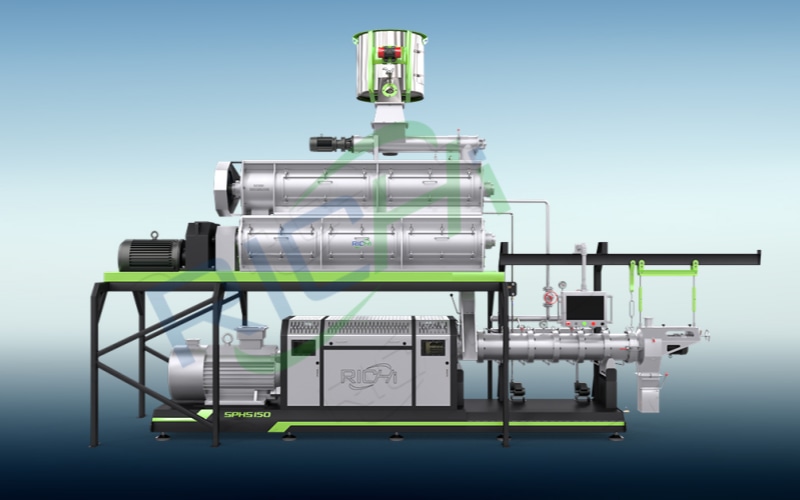
Twin-screw extruders are common in pet food production because they handle a wider range of formulas and provide better control over mixing, cooking, and expansion. Single-screw extruders are simpler and less expensive, but they are less flexible and may struggle with high-fat or high-protein formulas.
Die design is also important. Different products require different shapes and sizes. Some dies produce round kibble, others produce star, bone, or other shapes. Changing dies requires downtime, so producers often plan production runs by product type to minimize changeovers.
Drying and coating systems must also be matched to the product. Cat food kibble, being denser, may require different drying parameters than dog food kibble. Coating systems must handle different fat levels and flavor types.
What Buyers Should Ask Before Selecting a Line
Producers looking for a 1 t/h industrial pet food extruder for dog food and cat food production line should ask several questions before committing to a purchase.
First, can the extruder handle both formulas without major modification? Some machines are optimized for one product type and require significant changes for the other. A flexible machine may cost more upfront but save time and money over the life of the plant.
Second, what is the realistic output for each product? Rated capacity is often based on a specific formula under ideal conditions. Actual output may be lower for high-fat or high-protein formulas. The buyer should ask for realistic numbers based on their intended products.
Third, what supporting equipment is included? The extruder is the core, but the grinder, mixer, dryer, coater, cooler, and packaging system all affect the final product. A complete line should be designed as a system, not as a collection of separate machines.
Fourth, what training and support are provided? Pet food extrusion requires skill. Operators need to understand how formula changes affect the process. A supplier who provides training and ongoing technical support is more valuable than one who only delivers equipment.
Raw Material Sourcing and Formula Development
The raw materials available locally shape the formula and the process. In some regions, animal proteins are abundant and affordable. In others, plant proteins dominate. The producer must build formulas around what is available, then adjust the extrusion process accordingly.
Formula development should be done with the extruder in mind. A nutritionist can design a formula that meets the animal’s needs, but the production team must confirm that the formula extrudes well. Testing is essential. Small-scale trials can reveal problems before full production begins.
Producers should also consider the cost of ingredients. Pet food is a competitive market, and price matters. A formula that uses expensive ingredients may produce a superior product, but it may not sell if the price is too high. Finding the right balance between quality and cost is an ongoing task.
Quality Control for Pet Food
Quality control in pet food production covers several areas. Nutritional consistency, physical quality, safety, and shelf life all matter.
Nutritional consistency requires accurate batching and mixing. Small errors in vitamin or mineral addition can affect animal health. Regular testing of finished product helps confirm that the formula is being followed.
Physical quality includes kibble size, shape, hardness, and color. These attributes affect customer perception and pet acceptance. Regular checks help maintain consistency.
Safety includes control of pathogens, toxins, and foreign materials. Incoming materials should be tested. Production areas should be clean. Finished product should be protected from contamination.
Shelf life depends on moisture content, packaging, and storage conditions. Proper drying, cooling, and packaging extend shelf life and reduce waste.
Equipment Suppliers and Support
Equipment suppliers play a significant role in the success of a pet food project. A supplier with experience in pet food production will understand the differences between dog and cat food formulas and can recommend appropriate equipment configurations.
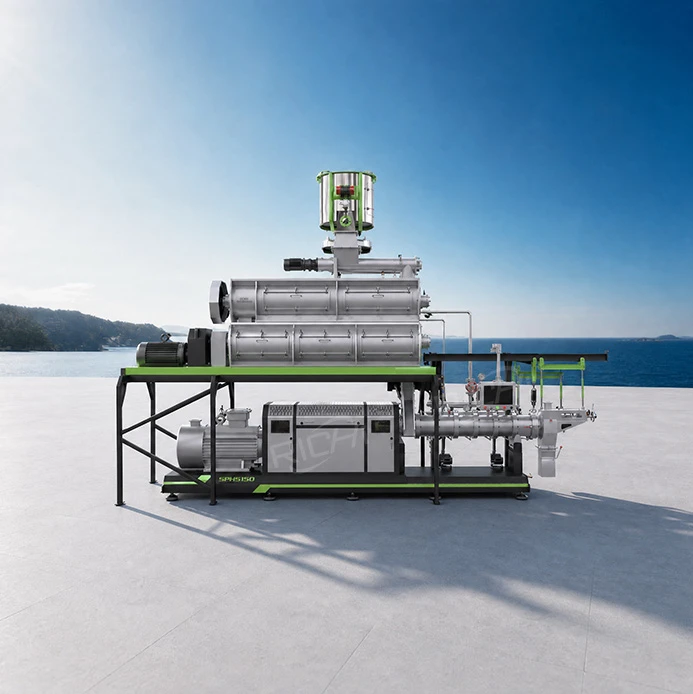
Producers often review a manufacturer’s background before committing to a project. A company such as Richi Pellet Machine may have experience across multiple feed and food applications. That breadth can be useful, but it should be verified against specific pet food experience. A supplier who has worked with similar products will anticipate problems that others miss.
It also helps to visit a running plant if possible. Seeing a similar operation can reveal practical issues that are not visible in a catalog. How is the extruder controlled? How often are dies changed? How is coating managed? These details matter more than glossy photos.
Planning and Investment
Setting up a pet food line is a capital project. It requires land, buildings, utilities, equipment, and working capital. The investment should be planned in phases.
Market research comes first. Who are the customers? What products do they buy? What prices do they pay? This information shapes the product and the plant.
Capacity planning follows. How much product can be sold? How many shifts are needed? The plant should be sized to meet current demand with some room for expansion.
Equipment selection and supplier evaluation come next. Total cost of ownership includes energy, maintenance, spare parts, and downtime. The cheapest option is rarely the best.
Training and quality control are ongoing tasks. Operators need to understand the process. Records should be kept. Customer feedback should be collected and acted on.
Common Mistakes in Pet Food Extrusion
Several mistakes appear repeatedly in new pet food projects.
Assuming dog and cat food are the same. The formulas behave differently, and the equipment settings must be adjusted accordingly.
Ignoring starch content. Starch drives expansion. Formulas with different starch levels require different process settings.
Undersizing the dryer or coater. These steps affect product quality and shelf life. They should not be treated as afterthoughts.
Skipping trials. Small-scale testing reveals problems before full production begins. It is cheaper to fix problems early.
Underestimating working capital. Raw materials must be purchased before product is sold. Inventory sits in the warehouse. Cash flow must be planned carefully.
Conclusion
Dog food and cat food can be produced on the same extrusion line, but they are not the same product. The formulas behave differently, and the process must be adjusted accordingly. Starch content, fat level, protein source, and equipment configuration all affect the final kibble.
A pet food extruder designed for flexibility can handle both products, but it must be matched to the intended formulas and production scale. A 1 t/h industrial pet food extruder for dog food and cat food production line can be the foundation of a profitable business, but only if the producer understands the material, the process, and the market.
For those who take the time to plan properly and test thoroughly, pet food production offers steady demand and the opportunity to build a sustainable operation. For those who rush in without understanding the differences, it can be an expensive lesson. The difference lies in the preparation, not the equipment.